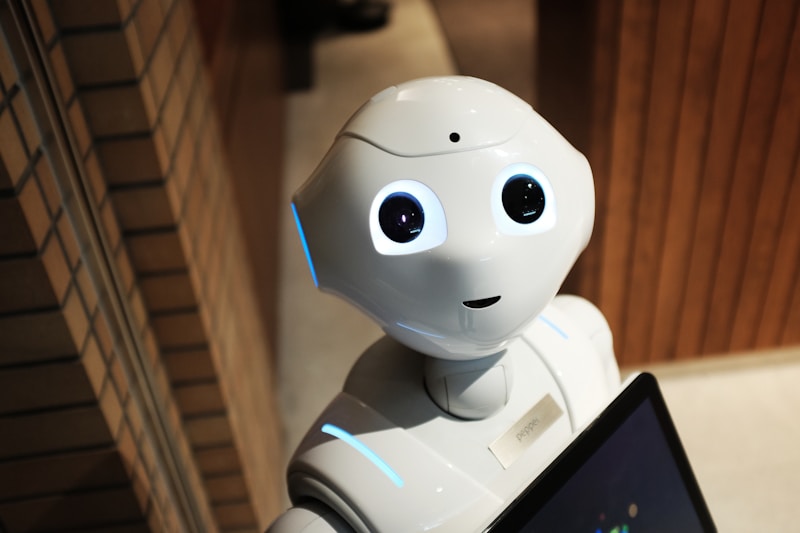
A humanoid robot just became a $5.5 billion idea. Apptronik, the Austin-based robotics company spun out of the University of Texas, has closed a $520 million funding round that values the company at $5.5 billion and sets it on a path to mass-produce its Apollo humanoid robot for warehouse, manufacturing, and logistics applications. The round, led by a consortium including strategic investors from the automotive and logistics industries, is the largest single raise in the humanoid robotics sector to date -- and it guarantees that these machines will be walking the floors of IMTS, Automate, CES, and a dozen other trade shows before the year is out.
This is not science fiction money chasing a distant dream. Apptronik already has pilot deployments running at Mercedes-Benz assembly plants and GXO Logistics warehouses. Apollo, standing 5 feet 8 inches tall and capable of lifting up to 55 pounds, is designed to work alongside humans in environments built for human bodies -- no reconfigured factory layouts required. That design philosophy makes it uniquely suited for trade show demonstrations, where space is tight, aisles are crowded, and the ability to operate safely near people is not optional.
The Humanoid Arms Race Intensifies
Apptronik is not alone in the race to commercialize humanoid robots, but the $520 million raise puts it in a rarefied tier. Figure AI, backed by investors including Jeff Bezos and Nvidia, has been demonstrating its Figure 02 robot at logistics facilities. Tesla continues to iterate on Optimus, with Elon Musk projecting mass production timelines that shift with each earnings call. Boston Dynamics' Atlas has transitioned from hydraulic to electric actuation, signaling a pivot toward commercial viability. And Chinese competitors like Unitree and UBTECH are shipping lower-cost humanoids to factories across Asia.
What separates Apptronik is the combination of capital, commercial partnerships, and a robot designed from the ground up for real-world deployment rather than viral videos. Apollo's modular architecture allows operators to swap tool attachments and sensor packages depending on the task, a feature that translates beautifully to trade show demonstrations where versatility tells a more compelling story than a single scripted routine.
"We are past the point of asking whether humanoid robots will work in factories. The question now is how fast they scale -- and trade shows are where the scaling conversations happen." -- Jeff Cardenas, Apptronik CEO
IMTS 2026: Humanoids Meet the Manufacturing Mainstream
The International Manufacturing Technology Show, held every two years at Chicago's McCormick Place, is the largest manufacturing trade show in the Western Hemisphere. IMTS 2024 drew over 89,000 registrants across 1.2 million square feet of exhibit space. The 2026 edition, scheduled for September, is already shaping up to be the show where humanoid robots transition from novelty attractions to serious capital equipment discussions.
Apptronik has reportedly reserved a major booth in the Automation and Robotics pavilion, and multiple integration partners are expected to demonstrate Apollo performing tasks like machine tending, parts inspection, and material transport. For exhibitors in adjacent categories -- CNC machine builders, tooling suppliers, metrology companies -- the foot traffic drawn by a walking, working humanoid robot is both an opportunity and a challenge.
Opportunities for Nearby Exhibitors
- The halo effect is real. Booths within a 50-foot radius of a humanoid robot demo will see significantly higher foot traffic. If you are in that zone, design your booth to capture passing attention with quick, visible demonstrations of your own products.
- Integration stories sell. If your product can work with or alongside a humanoid robot -- fixtures that a robot can load, inspection systems that a robot can position, conveyors that a robot can feed -- feature that story prominently. Buyers at IMTS are looking for complete solutions, not isolated components.
- Safety conversations are conversation starters. Every manufacturing buyer evaluating humanoid robots has safety questions. Exhibitors selling safety systems -- light curtains, area scanners, safety-rated controllers -- should plan demos that specifically address human-robot collaboration scenarios.
Automate 2026: The Robotics Industry's Home Turf
Automate, organized by the Association for Advancing Automation (A3), is the robotics industry's dedicated trade show. Held in Detroit, it draws a focused audience of automation engineers, plant managers, and systems integrators who are actively specifying and purchasing robotic systems. If IMTS is where humanoid robots meet the manufacturing mainstream, Automate is where they get purchase orders.
For exhibitors at Automate, Apptronik's presence raises the bar on demo quality across the entire show floor. The days of showing a robot arm performing a simple pick-and-place cycle and calling it a demo are over. Attendees who have just watched a humanoid robot navigate a simulated warehouse, identify objects, and perform multi-step manipulation tasks will expect every exhibitor to demonstrate comparable sophistication -- or at least explain why their simpler solution delivers better ROI.
Exhibitor Playbook: Competing With a Humanoid for Attention
When a 5-foot-8 humanoid robot is walking the show floor, your 10x10 booth with a looping video needs a different strategy. Three tactics that work: (1) Schedule live demos on a tight loop -- every 15 minutes -- so there is always something happening when a crowd drifts by. (2) Use vertical signage and elevated displays that are visible over the heads of crowds gathered around the robot. (3) Staff your booth with engineers who can engage in technical depth, because the attendees drawn by humanoid hype tend to be the most technically sophisticated buyers on the floor.
CES: Where Consumer Fascination Meets Industrial Reality
CES has become the unlikely proving ground for humanoid robots, with companies like Samsung, LG, and multiple startups demonstrating bipedal machines to an audience of 130,000-plus attendees, media, and analysts. Apptronik has shown Apollo at CES before, but with $520 million in fresh capital, expect the 2026 demonstration to be dramatically more ambitious -- likely featuring multiple Apollos working collaboratively on a complex task, with real-time AI inference driving their behavior.
For CES exhibitors outside the robotics category, the humanoid robot phenomenon creates a specific dynamic. Media coverage gravitates toward the most visually dramatic demonstrations, and a walking humanoid with dexterous hands is extraordinarily photogenic. Exhibitors who want earned media coverage at CES 2026 need to either partner with a robotics company for a joint demo or invest in their own visual spectacle that can compete for journalist attention.
The Logistics and Safety Questions No One Is Asking Yet
Behind the excitement, humanoid robots on trade show floors create practical challenges that exhibitors and event organizers are only beginning to grapple with. A 160-pound machine walking autonomously through crowded aisles raises liability questions that traditional static exhibits do not. Convention centers are reviewing their insurance policies. Show organizers are drafting new exhibitor guidelines. And safety regulators are watching closely.
Exhibitors planning humanoid robot demonstrations should budget for additional insurance riders, dedicated safety personnel, and clearly delineated demo zones with physical barriers. The last thing any company wants is a viral video of their robot stumbling into an attendee -- that kind of footage kills sales pipelines faster than any competitor ever could.
Five Questions to Ask Before Your Robot Demo
- Does the convention center's insurance policy cover autonomous humanoid robot demonstrations, or do you need a supplemental policy?
- What are the power requirements for charging the robot between demonstrations, and has the show allocated sufficient electrical capacity to your booth?
- Do you have trained safety operators who can execute an emergency stop from any position around the demo area?
- Is your demo script designed for a noisy, visually chaotic trade show environment, or does it depend on controlled conditions that the show floor cannot provide?
- Have you coordinated with adjacent exhibitors about noise, crowd flow, and sight lines that your demonstration may affect?
Apptronik's $520 million war chest does not just fund robot production. It funds the marketing, trade show presence, and channel partnerships that will put Apollo in front of every manufacturing, logistics, and technology buyer in the world. For exhibitors across the industrial trade show circuit, the humanoid robot era is not approaching -- it arrived with this funding round, and it is booking booth space right next to yours.
The exhibitors who thrive will be the ones who figure out how to ride the wave of attention rather than drown in it. Start planning now.