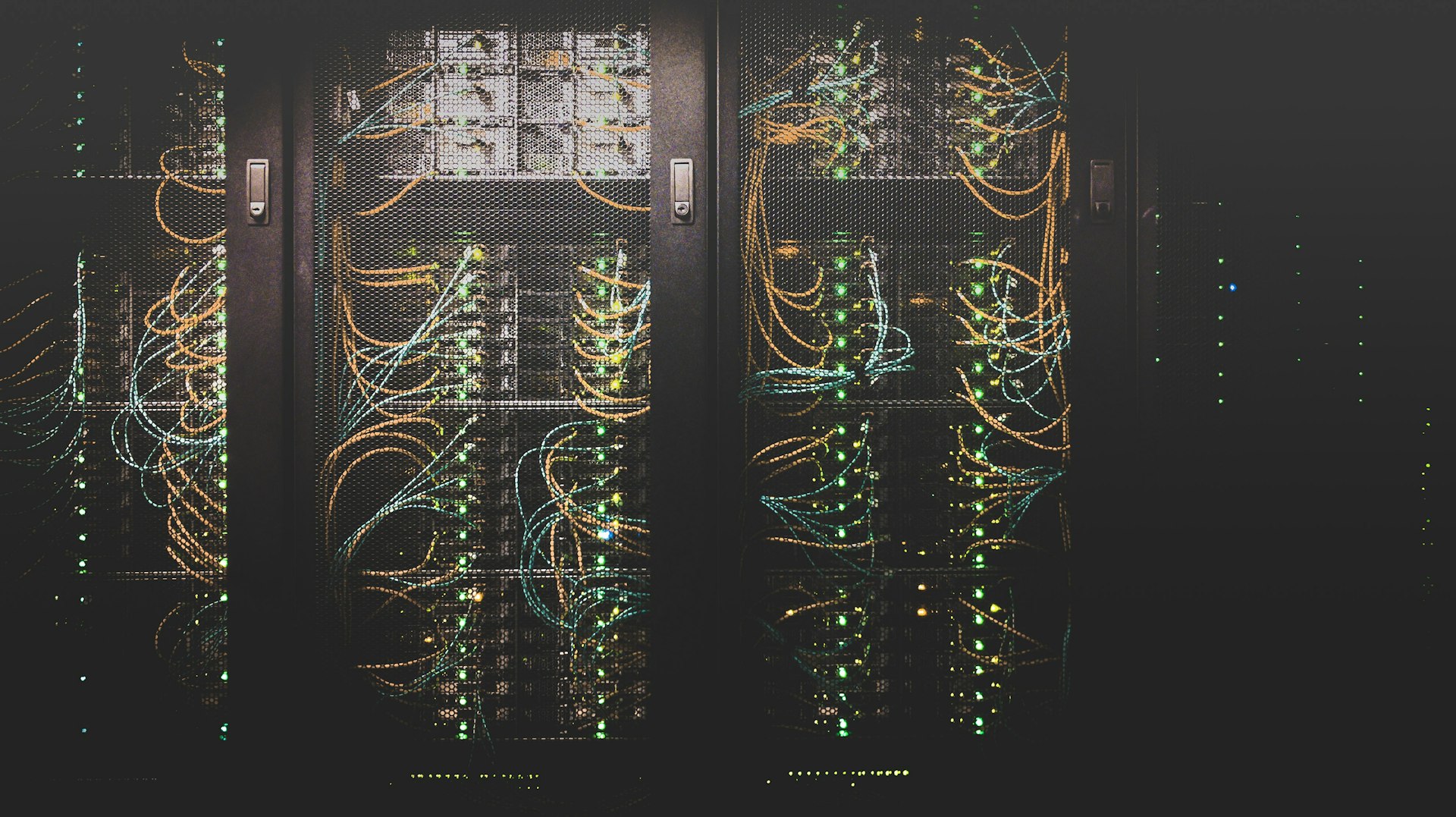
The construction industry is experiencing a seismic realignment. Data center construction spending has surged fivefold in just two years, according to ConstructConnect, creating an unprecedented wave of demand for heavy equipment, electrical systems, power infrastructure, and skilled labor. Power infrastructure spending alone is projected to reach $27.8 billion in 2026, up from $16.5 billion in 2025 — a 68 percent increase in a single year. At the same time, the equipment that builds these facilities is itself undergoing a generational transformation: electric drivetrains are replacing diesel engines, autonomous systems are supplementing human operators, and AI-driven management platforms are optimizing every aspect of machine performance and jobsite logistics.
These two forces — an explosion in construction demand driven by data centers and power infrastructure, and a fundamental electrification of the machines that do the building — are converging at CONEXPO-CON/AGG 2026, the construction industry's largest trade show in the Western Hemisphere. Running March 3-7 at the Las Vegas Convention Center, CONEXPO 2026 expects nearly 140,000 attendees and more than 2,000 exhibitors spread across 3 million square feet of exhibit space. For equipment manufacturers, technology providers, and construction firms, this event represents the most significant opportunity of the year to see, demonstrate, and negotiate the machines and systems that will define infrastructure development for the next decade.
The Data Center Construction Boom: Understanding the Numbers
The scale of data center investment now underway has no historical precedent in the construction sector. Global data center infrastructure spending is projected to approach $7 trillion over the next five years, representing a sustained investment cycle that dwarfs even the post-financial-crisis infrastructure recovery of the 2010s. In the United States alone, the Dodge Construction Network forecasts a 4 percent increase in total construction starts for 2026, with data center growth leading the charge at 39.9 percent year-over-year expansion.
To understand why these numbers matter for the construction equipment and building technology industries, consider what a single large-scale data center project requires. A hyperscale facility can consume 100 megawatts or more of continuous power, requiring dedicated substations, miles of high-voltage cabling, redundant cooling systems, and thousands of tons of structural steel and concrete. The site preparation alone may involve moving hundreds of thousands of cubic yards of earth, installing complex stormwater management systems, and building dedicated access roads capable of supporting the constant truck traffic that a multi-year construction project demands.
This is not a speculative bubble. The demand is being driven by concrete, measurable workloads: artificial intelligence training and inference, cloud computing migration, streaming media infrastructure, autonomous vehicle development, and the growing computational needs of every sector from healthcare to financial services. Major technology companies — Microsoft, Google, Amazon, Meta, and Apple among them — have publicly committed to multi-billion-dollar data center expansion programs that will extend well into the 2030s. These commitments represent contracted demand, not projections, and they are creating a construction pipeline that is already straining the industry's capacity.
The Power Infrastructure Bottleneck
The most significant constraint on data center construction is not land, labor, or equipment — it is power. Electrification is accelerating across every major sector of the economy, from transportation to manufacturing to residential heating, and this broad electrification trend is outpacing existing grid capacity. Data centers are the single largest new source of electricity demand, and the power infrastructure required to serve them represents an enormous construction opportunity in its own right.
The $27.8 billion projected for U.S. power infrastructure spending in 2026 encompasses new generation facilities, transmission lines, substations, and distribution upgrades. Much of this investment is directly tied to data center development. Utilities in Virginia, Texas, Georgia, and Ohio — the states with the largest data center pipelines — are filing for unprecedented capacity additions. Dominion Energy in Virginia has requested regulatory approval for generation additions that would have been unthinkable five years ago, driven almost entirely by data center load growth in the Northern Virginia corridor.
"The construction industry is facing a dual challenge that is also a dual opportunity: we need to build more power infrastructure than at any time since the original buildout of the national grid, and we need to do it with equipment and methods that are themselves becoming electrified and autonomous."
— Dodge Construction Network, 2026 Outlook
For construction equipment manufacturers and exhibitors at CONEXPO 2026, the power infrastructure story is as important as the data center story. Every new substation, every mile of transmission line, every generation facility requires earthmoving, concrete work, steel erection, and electrical installation. The equipment that performs this work is the equipment being showcased in Las Vegas.
CONEXPO-CON/AGG 2026: The Industry's Defining Moment
CONEXPO-CON/AGG has always been the construction industry's premier equipment exhibition, held every three years and drawing attendees from more than 130 countries. The 2026 edition arrives at a moment when the industry's fundamental technologies are changing more rapidly than at any point since the transition from steam to diesel power a century ago. Nearly 140,000 attendees will walk the show floor examining machines that would have been science fiction at the last CONEXPO in 2023: fully autonomous loaders that require no operator, electric excavators that produce zero direct emissions, and AI-powered fleet management systems that optimize fuel consumption, maintenance scheduling, and operator safety in real time.
The show's scale is itself a statement about the industry's health and trajectory. With more than 2,000 exhibitors occupying 3 million square feet, CONEXPO 2026 is larger than any previous edition. The growth reflects the influx of technology companies — sensor manufacturers, software platforms, battery producers, autonomous systems developers — that are now integral to the construction equipment ecosystem. These companies would not have had a presence at CONEXPO a decade ago. Their presence today signals the depth of the industry's technological transformation.
The Ground Breakers Stage: Where Technology Meets Tradition
One of the most significant additions to CONEXPO 2026 is the new "Ground Breakers Stage," a dedicated programming venue focused on artificial intelligence, robotics, connectivity, and infrastructure trends. This stage represents CONEXPO's acknowledgment that the construction industry's future will be shaped as much by software and data as by steel and hydraulic fluid. Sessions will cover topics ranging from machine learning applications in predictive maintenance to the regulatory landscape for autonomous construction equipment on public infrastructure projects.
For exhibitors, the Ground Breakers Stage creates a content marketing opportunity that did not exist at previous CONEXPO events. Companies with expertise in AI, automation, or electrification can propose speaking sessions that position their leadership as industry authorities, generating qualified leads among the thousands of attendees who will flow through the programming area. The stage also represents a networking hub where technology providers and traditional equipment manufacturers can identify partnership opportunities — a critical dynamic as the industry's supply chains become increasingly integrated across hardware and software domains.
Bobcat RogueX3: The Autonomous Electric Concept That Signals an Industry Shift
Among the hundreds of product launches planned for CONEXPO 2026, few carry the symbolic weight of Bobcat's RogueX3. This fully electric, fully autonomous concept loader represents the convergence of three transformative technologies — electrification, autonomy, and modular design — in a single machine from one of the construction industry's most recognized brands. The RogueX3 is not a production machine; it is a concept vehicle designed to demonstrate where Bobcat believes the industry is heading. But the technology it showcases is real, and much of it is closer to commercial deployment than many industry observers expect.
The RogueX3 features a modular configuration system that allows the machine to be adapted for different tasks by swapping functional modules. This approach borrows from manufacturing and military equipment design, where modularity has proven its value in reducing fleet size while increasing capability. For a construction contractor operating a mixed fleet, the economic implications are significant: instead of owning separate machines for loading, grading, trenching, and material handling, a modular platform could perform all of these functions with appropriate module changes.
The autonomous capability of the RogueX3 is perhaps its most consequential feature. The construction industry faces a severe and worsening labor shortage, with the Associated General Contractors of America reporting that more than 80 percent of construction firms struggle to find qualified workers. Autonomous equipment does not replace skilled operators in the near term — it extends their productivity by performing repetitive, well-defined tasks without direct human control, freeing experienced operators for work that requires judgment, creativity, and adaptability.
"Autonomy in construction is not about removing people from jobsites. It is about allowing the people who are there to accomplish more, with greater safety and consistency, by delegating routine tasks to machines that can execute them reliably around the clock."
— Bobcat, CONEXPO 2026 Preview
What the RogueX3 Means for Exhibitors
The RogueX3 will attract enormous attention at CONEXPO 2026, and exhibitors in adjacent categories — sensors, batteries, autonomous navigation systems, modular attachment manufacturers — should plan their messaging and booth strategies to connect with the audience that Bobcat's concept machine draws. When a major OEM validates a technology direction with a high-profile concept vehicle, it creates immediate market credibility for every company in that technology's supply chain. Exhibitors selling lidar sensors, battery management systems, electric motor controllers, or autonomous navigation software should explicitly reference the broader industry validation that machines like the RogueX3 represent.
Moog Inc. and Adaptive Electrification: Enabling the OEM Transition
While Bobcat's RogueX3 represents the end state of construction equipment electrification, Moog Inc.'s debut of its Adaptive Electrification Management System (AEMS) addresses the critical question of how the industry gets there. AEMS is designed specifically for OEMs that are navigating the transition from hydraulic to electric systems in heavy equipment — a transition that is technically complex, commercially risky, and operationally disruptive.
The challenge facing construction equipment OEMs is substantial. Their customers operate in demanding environments where reliability is non-negotiable, duty cycles are extreme, and the cost of machine downtime can exceed $10,000 per day on large projects. Electrification offers clear benefits — lower operating costs, reduced emissions, quieter operation, simpler maintenance — but it also introduces new engineering challenges around battery thermal management, power electronics durability, and energy density for machines that must operate at high loads for extended periods.
Moog's AEMS platform provides OEMs with an integrated system for managing electric drivetrains in heavy equipment, including power distribution, thermal management, energy recovery, and diagnostic monitoring. The "adaptive" element is critical: the system continuously adjusts its operating parameters based on real-time conditions, optimizing energy usage and component life across varying load profiles and environmental conditions. For an OEM launching its first electric excavator or loader, AEMS reduces development risk by providing a proven, integrated electrification platform rather than requiring the OEM to engineer every subsystem from scratch.
Danfoss eHydraulics: The Bridge Between Diesel and Electric
Not every machine on a construction site will be fully electric within the next decade. The energy density of diesel fuel remains significantly higher than current battery technology, and many construction applications — long-duration earthmoving, remote site operations, heavy lifting — will continue to require combustion power or hybrid solutions for years to come. Danfoss's eHydraulics portfolio, prominently featured at CONEXPO 2026, addresses this reality with solutions that bridge the gap between conventional hydraulic systems and fully electric architectures.
Danfoss is spotlighting its ePump and eTraction systems, which are designed for battery-electric and hybrid construction machinery. The ePump replaces the conventional engine-driven hydraulic pump with an electrically driven unit, enabling precise flow and pressure control that is not possible with engine-speed-dependent conventional pumps. The result is improved energy efficiency, reduced heat generation, and more precise machine control — benefits that translate directly into productivity and operating cost advantages for contractors.
The eTraction system addresses the propulsion side of construction equipment electrification, providing electric drive capability for wheeled and tracked machines. For hybrid applications, eTraction can work alongside a downsized diesel engine, allowing the machine to operate in full-electric mode for low-load tasks and engaging the diesel engine only when peak power is required. This approach reduces fuel consumption and emissions without sacrificing the operational flexibility that contractors demand.
Why Hybrid Matters for the Data Center Build-Out
The hybrid approach that Danfoss represents is particularly relevant to the data center construction boom. Data center projects often involve extended construction timelines of 18 to 36 months, with varying equipment utilization across project phases. During site preparation, machines operate at high load factors for extended periods, favoring diesel or hybrid power. During later construction phases, where equipment use is more intermittent, full-electric operation becomes more practical. A hybrid machine that can operate in both modes offers contractors the flexibility to optimize their equipment strategy across the full project lifecycle.
Additionally, many data center projects are being developed with sustainability requirements that specify reduced emissions during construction. Tech companies that are investing billions in data centers are also committed to corporate sustainability goals, and they increasingly expect their construction partners to minimize the environmental impact of the building process itself. Equipment that operates in electric mode during noise-sensitive or emissions-restricted phases — near residential areas, during overnight work, or inside partially enclosed structures — provides a competitive advantage for contractors bidding on these projects.
The Electrification Imperative: Grid Strain and Opportunity
The electrification trend extends far beyond construction equipment. Across every major sector of the economy, the transition from fossil fuels to electricity is accelerating: electric vehicles are capturing an increasing share of new car sales, heat pumps are replacing gas furnaces in residential and commercial buildings, and industrial processes from steelmaking to chemical production are exploring electrified alternatives. This broad electrification wave is creating enormous demand for electrical infrastructure — and significant strain on existing grid capacity.
For the construction industry, this grid strain is both a challenge and an opportunity. The challenge is practical: electric construction equipment requires charging infrastructure on jobsites, and many active construction sites do not have the electrical service capacity to support high-powered charging alongside other site electrical needs. Contractors adopting electric equipment must plan for charging logistics, including generator-based charging for remote sites where grid power is not available — an ironic arrangement that underscores the transitional nature of the current moment.
The opportunity is commercial: every megawatt of new generation capacity, every mile of new transmission line, and every upgraded substation requires construction. The electrical infrastructure buildout required to support economy-wide electrification represents a multi-decade construction program that will sustain demand for heavy equipment, electrical contractors, and infrastructure development expertise. Exhibitors at CONEXPO 2026 who can connect their products and services to this macro trend will find a receptive audience among contractors who are positioning themselves for the electrical infrastructure opportunity.
"We are building the grid that will power the machines that will build the next generation of the grid. The circularity of this investment cycle means the construction industry will be at the center of the electrification story for decades to come."
— Industry Analysis, Construction Electrification Outlook 2026
Exhibitor Strategy for CONEXPO-CON/AGG 2026
CONEXPO's scale and three-year cycle create a unique strategic environment for exhibitors. This is not a show where incremental booth improvements deliver incremental results. The companies that win at CONEXPO are the ones that arrive with a clear narrative, compelling demonstrations, and a disciplined lead capture and follow-up process. Here are the strategic imperatives for CONEXPO 2026:
1. Connect Your Products to the Data Center and Power Infrastructure Story
The data center construction boom is the single most powerful demand driver in the industry right now, and the power infrastructure buildout is close behind. Every exhibitor — from earthmoving equipment manufacturers to concrete producers to electrical system suppliers — should articulate how their products serve these high-growth markets. This does not require a complete messaging overhaul; it requires creating specific content, case studies, and talking points that demonstrate relevance to data center and power infrastructure projects.
- Equipment manufacturers: Highlight machine specifications that are relevant to data center site preparation, including precision grading capabilities, compaction performance, and efficiency in repetitive operations that characterize large-site development.
- Technology providers: Demonstrate how your software, sensors, or systems improve productivity on the large, complex projects that data center and power infrastructure construction represents. Fleet management, grade control, and project management solutions are particularly relevant.
- Material suppliers: Data center construction consumes enormous quantities of concrete, steel, and specialized materials. Suppliers who can demonstrate supply chain reliability and the ability to meet the demanding specifications of mission-critical facilities will differentiate themselves.
2. Demonstrate Electrification Readiness
Whether your company manufactures electric equipment, sells components for electric systems, or provides services to contractors operating electric machines, the electrification narrative will dominate CONEXPO 2026. Attendees will be evaluating their own electrification timelines, and they will gravitate toward exhibitors who can help them understand the practical implications of the transition.
- If you sell electric equipment, provide realistic performance data under real-world conditions, not laboratory specifications. Contractors need to understand duty cycle limitations, charging requirements, and total cost of ownership compared to diesel equivalents.
- If you sell components or systems, demonstrate integration with major OEM platforms. The Moog AEMS approach — providing complete subsystems rather than individual components — reflects a market preference for integrated solutions that reduce development risk.
- If you provide services, explain how your capabilities apply to electric equipment. Maintenance practices, operator training requirements, and safety protocols all change with electrification, and service providers who can articulate these differences will establish credibility.
3. Leverage the Ground Breakers Stage
The new Ground Breakers Stage is a content marketing opportunity that sophisticated exhibitors will exploit aggressively. If your company has genuine expertise in AI, robotics, autonomous systems, or infrastructure trends, apply for a speaking slot. If you cannot secure a speaking position, schedule satellite events, media briefings, and customer meetings that tie into the Ground Breakers programming. The attendees drawn to this stage are the industry's technology-forward decision-makers — exactly the audience that exhibitors selling innovative products and services need to reach.
4. Plan for Five Full Days
CONEXPO 2026 runs March 3-7, a full five days that can exhaust even the most experienced trade show teams. Staff planning must account for this extended timeline. Rotate booth personnel to maintain energy and engagement quality throughout the show. Schedule your most important customer meetings and media interactions for Tuesday through Thursday, when attendance peaks, but do not neglect Monday and Friday, which often produce higher-quality one-on-one conversations due to lower overall traffic.
5. Invest in Lead Capture and Real-Time Follow-Up
With nearly 140,000 attendees, the volume of potential contacts at CONEXPO is staggering. Every conversation, business card exchange, and badge scan represents a potential relationship — but only if the contact information is captured accurately and the follow-up process begins promptly. Use Scannly to digitize badge scans instantly, tag contacts with notes about their interests and requirements, and export organized lead lists that your sales team can act on before the show even ends. The exhibitors who convert CONEXPO traffic into qualified pipeline fastest will capture disproportionate value from the event.
World of Concrete 2026: The Complementary Show for Infrastructure Exhibitors
While CONEXPO is the construction industry's broadest trade show, World of Concrete serves the specialized concrete and masonry segments with a depth and focus that CONEXPO cannot match. Held annually in Las Vegas (the 2026 edition typically runs in January), World of Concrete draws approximately 60,000 attendees who are specifically involved in concrete production, placement, finishing, and related construction activities.
For exhibitors whose products serve the data center construction market, World of Concrete is an essential complement to CONEXPO. Data center construction is extraordinarily concrete-intensive: foundations for server halls, structural slabs designed for extreme floor loading, tilt-up wall panels, and massive equipment pads for cooling systems, generators, and electrical switchgear. The concrete specifications for data center projects are demanding, often requiring high-strength mixes, specialized reinforcement, and precision placement tolerances that exceed typical commercial construction requirements.
Exhibitors at World of Concrete should consider the following strategies for connecting with the data center construction audience:
- Highlight high-performance concrete solutions. Data centers require concrete with specific performance characteristics: high compressive strength, low permeability, controlled shrinkage, and sometimes specialized thermal properties. Exhibitors offering admixtures, high-performance mixes, or advanced reinforcement systems should develop data-center-specific marketing materials.
- Demonstrate floor flatness and levelness capability. Server hall floors must meet stringent flatness requirements to ensure proper installation of raised floor systems and server rack alignment. Concrete placement and finishing equipment that can consistently achieve FF/FL specifications of 50/50 or higher is directly relevant to this market.
- Address sustainability requirements. Tech companies building data centers increasingly specify low-carbon concrete in their construction contracts. Exhibitors offering supplementary cementite materials, carbon-capture concrete technologies, or EPD-documented products should position these capabilities prominently.
AHR Expo: Where Data Center Cooling Meets Construction
The AHR Expo (International Air-Conditioning, Heating, Refrigerating Exposition) is another critical show for companies involved in data center construction. Cooling systems represent one of the largest capital and operating expenditures for data center facilities, and the technology is evolving rapidly as AI workloads generate unprecedented heat densities that traditional CRAC (Computer Room Air Conditioning) units cannot manage efficiently.
Liquid cooling, direct-to-chip cooling, and immersion cooling systems are moving from niche applications to mainstream data center design, and these systems require specialized piping, heat exchangers, pumps, and controls that fall squarely within the HVACR industry's expertise. For exhibitors at AHR Expo, the data center cooling market represents a high-growth vertical that demands technical sophistication and project-level collaboration between HVAC contractors, mechanical engineers, and data center operators.
Strategic considerations for AHR Expo exhibitors targeting the data center market include:
- Showcase energy efficiency metrics. Data center operators evaluate cooling systems primarily on Power Usage Effectiveness (PUE), and any cooling technology that demonstrably reduces PUE has an immediate competitive advantage. Exhibitors should present real-world PUE data from deployed installations, not theoretical calculations.
- Address liquid cooling infrastructure. The transition from air cooling to liquid cooling in data centers creates enormous demand for piping systems, pumps, heat exchangers, cooling distribution units, and leak detection systems. HVAC manufacturers and contractors who are developing liquid cooling capabilities should feature these prominently.
- Emphasize redundancy and reliability. Data center cooling systems must operate continuously with extremely high availability targets, typically 99.999 percent or better. Exhibitors should demonstrate their products' reliability track records and explain how their solutions support the N+1 or 2N redundancy configurations that data center operators require.
The Labor Equation: Why Autonomous Equipment Demand Will Only Grow
The construction industry's labor shortage is not a temporary condition — it is a structural reality that autonomous and semi-autonomous equipment is increasingly being designed to address. The Bureau of Labor Statistics projects that construction employment demand will continue to outpace supply through at least 2030, driven by the infrastructure investment cycle that data centers, power systems, transportation, and climate resilience projects collectively represent.
Autonomous equipment addresses this shortage in several ways. First, it extends the productive hours of a jobsite by enabling operations during shifts when human operators are not available. Second, it allows skilled operators to supervise multiple machines simultaneously, effectively multiplying their productivity. Third, it reduces the physical demands of equipment operation, potentially extending careers and attracting workers who might otherwise avoid the industry due to the physical toll of operating heavy machinery for eight to twelve hours per day.
The Bobcat RogueX3 represents the most visible expression of this trend at CONEXPO 2026, but it is far from the only one. Caterpillar, Komatsu, John Deere, and Volvo CE are all advancing autonomous and semi-autonomous equipment programs. Smaller companies specializing in aftermarket autonomous retrofits — systems that add autonomous capability to existing equipment — are also exhibiting at CONEXPO in growing numbers. This aftermarket segment is particularly interesting because it allows contractors to extend the productive life of existing equipment assets rather than purchasing entirely new autonomous machines.
Safety as the Autonomous Value Proposition
The safety argument for autonomous construction equipment is compelling and often underemphasized. Construction remains one of the most dangerous industries in the United States, with the Bureau of Labor Statistics reporting approximately 1,000 fatalities annually. Many of these fatalities involve equipment operation — rollovers, struck-by incidents, and collisions. Autonomous equipment that operates in defined zones with sensor-based obstacle detection eliminates several categories of accident risk entirely. For contractors operating on data center projects, where safety performance directly affects their ability to win future contracts from technology companies that audit their construction partners' safety records, autonomous equipment offers both a moral and a commercial advantage.
The Investment Cycle: Where the Money Is Going
Understanding the investment cycle behind data center construction helps exhibitors at CONEXPO 2026, World of Concrete, and AHR Expo calibrate their strategies. The following breakdown illustrates how the approximately $7 trillion in projected global data center infrastructure spending will flow through the construction ecosystem:
- Site development and earthwork: Land acquisition, grading, utilities, stormwater management, and access infrastructure typically represent 10-15 percent of total project cost. This category directly serves the CONEXPO equipment audience.
- Structural construction: Foundations, slabs, walls, roofing, and structural steel account for 15-20 percent of project cost. Concrete producers, steel fabricators, and structural equipment manufacturers are primary beneficiaries.
- Mechanical and electrical systems: Power distribution, cooling systems, fire suppression, and building management systems represent 35-45 percent of total cost — the largest single category. This spending sustains demand across the HVACR, electrical, and controls industries.
- IT infrastructure: Servers, networking, storage, and cabling represent the remaining 25-35 percent. While this category is outside the construction equipment domain, it drives the specifications and timelines that construction partners must meet.
Preparing for the Next Decade: Technology Adoption Roadmap
The technologies being showcased at CONEXPO 2026 represent different stages of commercial maturity, and exhibitors and attendees alike should understand where each technology sits on the adoption curve:
Production-Ready Today
Electric compact equipment (mini excavators, compact track loaders, skid steers) is in commercial production from multiple OEMs. These machines are suitable for indoor work, urban jobsites with noise restrictions, and applications with predictable duty cycles. The Danfoss eHydraulics portfolio represents the component ecosystem that supports this production-ready category.
Scaling in 2026-2028
Hybrid medium-duty equipment, semi-autonomous grading and compaction systems, and AI-powered fleet management platforms are moving from pilot deployments to broader commercial availability. Moog's AEMS is designed to accelerate this scaling by reducing the engineering burden on OEMs developing hybrid and electric medium-duty machines.
Emerging (2028-2032)
Fully autonomous heavy equipment, hydrogen fuel cell-powered machines, and AI-driven project management systems that coordinate autonomous fleets represent the next wave. The Bobcat RogueX3 lives in this category — a concept that demonstrates technical feasibility while the commercial and regulatory frameworks catch up.
Exhibitors should position their products within this framework, helping attendees understand not just what is possible today, but what the adoption timeline looks like for emerging technologies. Credibility in this industry comes from honest assessment of technology readiness, not from overpromising capabilities that are still years from commercial deployment.
The Regulatory Landscape: Policy Tailwinds and Headwinds
Federal and state policy is creating both tailwinds and headwinds for construction electrification. The Infrastructure Investment and Jobs Act (IIJA) and the Inflation Reduction Act (IRA) have directed hundreds of billions of dollars toward infrastructure development and clean energy projects, creating direct demand for construction services. Tax credits for clean energy equipment, including electric vehicles and associated charging infrastructure, provide financial incentives for contractors to adopt electric equipment.
On the other hand, emissions regulations for construction equipment are tightening, with several states exploring or implementing low-emission and zero-emission zones for construction projects. California's Air Resources Board has proposed regulations that would require increasing percentages of zero-emission equipment on state-funded projects, and other states are watching this regulatory experiment closely. For equipment manufacturers, these regulations create commercial urgency around electrification programs. For exhibitors at CONEXPO, they create messaging opportunities: products that help contractors comply with current and anticipated emissions requirements have an inherent sales advantage.
International Dimensions: Global Demand, Global Exhibition
While this analysis has focused primarily on U.S. market dynamics, the data center construction boom and the construction electrification trend are global phenomena. Data center construction is surging in Ireland, the Netherlands, Singapore, Japan, and the Nordic countries, each with its own regulatory environment, climate considerations, and construction practices. China's data center buildout is massive but operates within a different commercial and regulatory framework. India is emerging as a major data center market with its own construction requirements and equipment preferences.
CONEXPO's international attendance — approximately 30 percent of visitors come from outside the United States — means that exhibitors with global products and services can use the show to address multiple markets simultaneously. International attendees at CONEXPO are typically high-level decision-makers who have traveled specifically for the event, making them exceptionally valuable contacts. Exhibitors should prepare multilingual materials, region-specific case studies, and staff who can discuss market conditions in key international territories.
Looking Ahead: The Construction Industry's Transformation
The convergence of data center construction demand, electrification, and autonomous equipment represents a generational transformation in the construction industry. The companies that will thrive in this environment are those that can simultaneously execute on today's demand — moving earth, pouring concrete, erecting steel — while investing in the technologies that will define tomorrow's capabilities. CONEXPO 2026 is where this dual challenge becomes tangible, with production machines and concept vehicles sharing exhibit space in a physical demonstration of the industry's simultaneous commitment to present execution and future innovation.
The numbers are extraordinary: a fivefold increase in data center construction spending, $27.8 billion in power infrastructure investment, $7 trillion in projected global data center infrastructure spending over five years, and 39.9 percent growth in U.S. data center construction starts. These figures represent not just market opportunity but an obligation — the construction industry must scale its capacity, adopt new technologies, and develop new skills to meet the demands being placed upon it. The equipment, systems, and technologies on display at CONEXPO 2026 are the tools the industry will use to meet that obligation.
For exhibitors, the strategic imperative is clear: arrive in Las Vegas with a story that connects your products and capabilities to the industry's most powerful demand drivers. Demonstrate not just what your equipment does, but how it serves the data center, power infrastructure, and electrification markets that are generating unprecedented construction demand. Invest in lead capture technology that converts the enormous CONEXPO audience into qualified pipeline. And recognize that in a show held only every three years, the cost of being unprepared is measured not in days but in years.
Plan Your Trade Show Strategy
Scannly replaces business cards with instant QR code contact exchange. Scan badges, share your info, and export leads in seconds — so you never lose a connection at CONEXPO, World of Concrete, or any trade show.
Download Scannly FreeGet the Complete Exhibitor Toolkit
19 checklists, spreadsheets, email templates, and guides — everything you need before, during, and after the show.
Get Mega Bundle — $49.99$213.81 — Save 77%