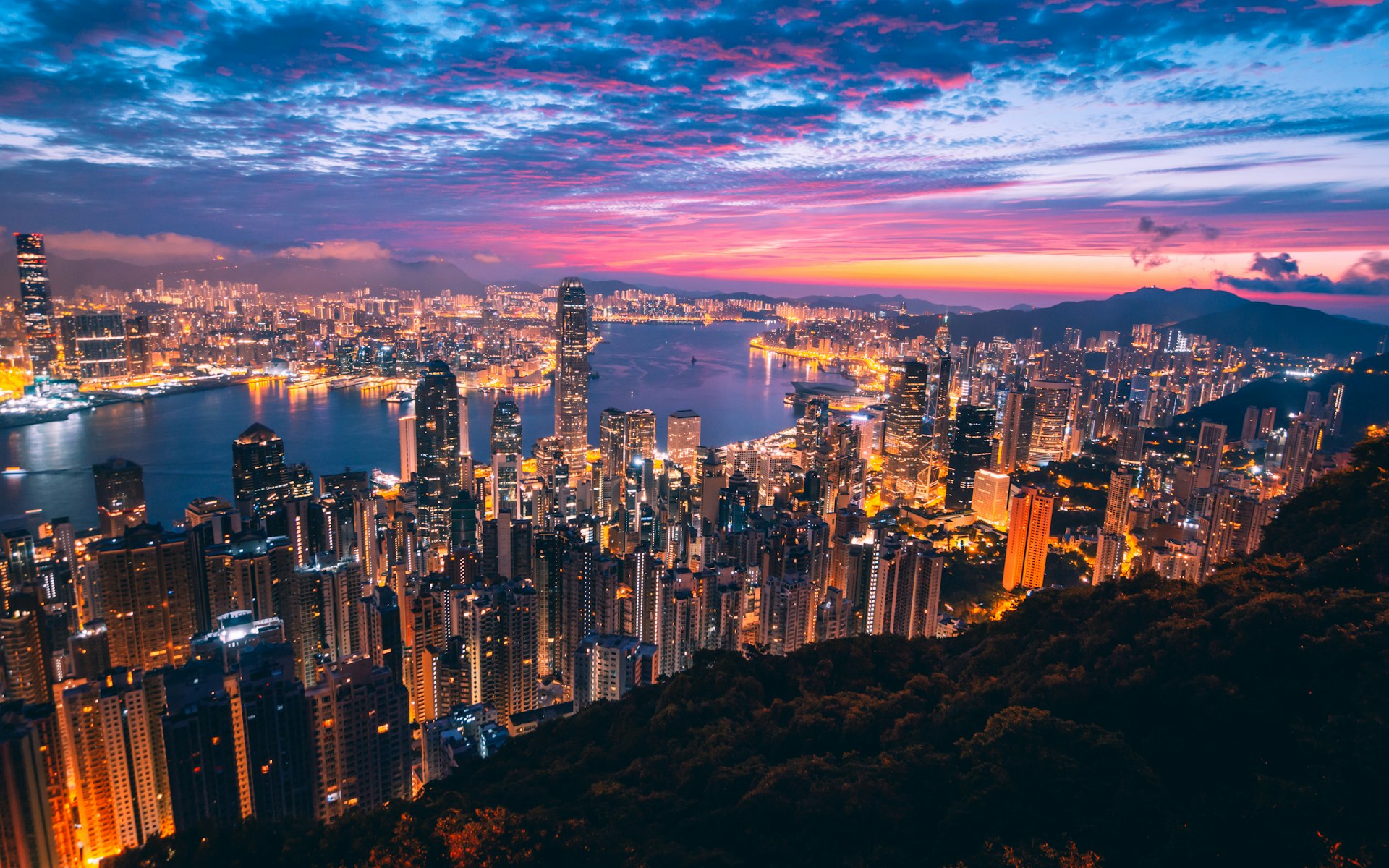
Jimmy Lai, the 77-year-old founder of Hong Kong's Apple Daily newspaper, was sentenced this week to 20 years in prison under Beijing's national security law. His crime: publishing a newspaper. The sentence, handed down by a panel of judges handpicked by Hong Kong's chief executive, represents the most severe penalty yet under the sweeping legislation that has transformed Hong Kong from Asia's freest city into a jurisdiction where the boundary between legal business activity and criminal liability is defined by political calculation.
If you are an exhibitor who attends or plans to attend trade shows in Hong Kong, this sentence should change your calculus. Not eventually. Now.
For three decades, Hong Kong was the gateway. The neutral ground where Western companies met Asian buyers, where intellectual property felt safe enough to display, where your employees could speak freely at industry dinners without worrying about surveillance. That Hong Kong is gone. The Lai sentence is not an aberration. It is the definitive proof point that the legal environment has fundamentally and irreversibly shifted.
The IP Exposure Problem
Trade shows are, by design, places where companies reveal proprietary information. You demonstrate unreleased products. You share technical specifications with potential buyers. You discuss pricing strategies, market entry plans, and competitive positioning in meetings arranged through the show. At a well-run trade show, this openness is the entire point — it drives the commercial relationships that justify the investment.
In Hong Kong under the national security law, that openness is a vulnerability. The law grants Hong Kong authorities broad powers to compel disclosure of business information in the interest of "national security" — a term that is deliberately undefined and has been applied to activities as benign as publishing opinion columns and organizing peaceful protests. Foreign companies exhibiting at Hong Kong trade shows are subject to Hong Kong law while on Hong Kong soil. Their devices, their data, and their personnel are within the jurisdiction of authorities who have demonstrated a willingness to interpret security threats expansively.
The practical implications for exhibitors are concrete. Demo devices brought into Hong Kong can be searched at the border. Digital data stored on devices that connect to Hong Kong networks is subject to local data access laws. Conversations at booth meetings are not protected by any privilege that Hong Kong authorities are obligated to respect. For companies in sensitive sectors — defense, semiconductors, advanced manufacturing, telecommunications, biotech — the IP risk of exhibiting in Hong Kong has crossed the threshold from theoretical to operational.
"We stopped sending prototype hardware to Hong Kong shows eighteen months ago. After the Lai verdict, we are pulling out entirely. The risk-reward calculation no longer works. There are other ways to reach Asian buyers that do not require putting our IP and our people in a jurisdiction with this legal trajectory."
— Sarah Kim, VP of Global Marketing, Applied Materials
The Employee Safety Dimension
The Lai sentence carries a personal risk dimension that corporate legal teams are taking increasingly seriously. Under the national security law, the definition of offenses is broad enough to encompass activities that are routine in Western business culture. Public statements criticizing Chinese government policy. Social media posts supporting democracy movements. Even corporate ESG reports that reference human rights conditions in China.
If an employee who has made any of these statements in their personal or professional capacity travels to Hong Kong for a trade show, they are entering a jurisdiction that has demonstrated the willingness to prosecute broadly and sentence harshly. The probability of any individual being targeted may be low. But the consequence of being wrong is a prison sentence measured in decades, in a system that has abandoned the procedural safeguards that once made Hong Kong's courts trustworthy.
Several multinational corporations have already quietly updated their travel policies. Employees are no longer required to attend Hong Kong-based trade shows. Some have made attendance voluntary with explicit risk acknowledgment forms. Others have prohibited travel to Hong Kong entirely for executives with access to sensitive information or public profiles that could attract scrutiny. These policies are not public — companies do not want to antagonize Beijing — but they are reshaping attendance patterns at Hong Kong's major trade events.
The Data on Hong Kong Show Attendance
The Hong Kong Trade Development Council (HKTDC) reported that international exhibitor participation at its flagship events declined 18% between 2023 and 2025. Western exhibitor participation dropped even more sharply — an estimated 31%, based on exhibitor directory analysis conducted by the Exhibition World research team. The HKTDC attributes the decline to "global economic headwinds." The exhibitors who left tell a different story.
Alternative Asian Markets Are Gaining Momentum
Singapore: The New Neutral Ground
Singapore has moved aggressively to capture trade show activity that is migrating from Hong Kong. The city-state expanded the Sands Expo and Convention Centre, opened the new Singapore Expo expansion in 2025, and launched targeted incentive programs for show organizers relocating events from Hong Kong. Singapore offers rule of law, IP protection, English-language business culture, and geographic proximity to the same Southeast Asian markets that Hong Kong served. Several major technology and financial services shows have already relocated.
Bangkok: Scale at Lower Cost
Thailand's MICE (meetings, incentives, conferences, exhibitions) sector has invested heavily in infrastructure. The Queen Sirikit National Convention Center completed its $400 million expansion in 2024, doubling its exhibition space. Bangkok offers significantly lower costs than Singapore or Hong Kong — booth space, hotels, and F&B run 40-60% less — making it attractive for exhibitors whose Asia strategy is cost-sensitive. The Thai government has backed this push with visa simplification and exhibitor tax incentives.
Tokyo and Seoul: Premium Markets
For exhibitors targeting the Japanese and Korean markets specifically, exhibiting in-market has always made more sense than routing through Hong Kong. Tokyo Big Sight and KINTEX in Seoul offer world-class facilities with none of the legal risks. The post-pandemic recovery has brought attendance at Japanese and Korean trade shows back to 2019 levels, with several sectors exceeding pre-pandemic numbers.
Kuala Lumpur and Jakarta: Emerging Alternatives
Malaysia and Indonesia are positioning their convention infrastructure for growth. The Malaysia International Trade and Exhibition Centre (MITEC), which opened in 2022, is actively recruiting international shows. Jakarta's Indonesia Convention Exhibition (ICE) complex is expanding. These markets offer access to rapidly growing ASEAN economies with emerging trade show ecosystems that are hungry for international exhibitor participation.
"The shift from Hong Kong is not a trend. It is a migration. Every major global show organizer I work with is either actively moving events to Singapore and Bangkok or building new events in those markets from scratch. Hong Kong's loss is structural and accelerating."
— Mark Cochrane, Regional Director Asia-Pacific, Informa Markets
What Exhibitors Should Do Now
1. Conduct a Hong Kong Risk Assessment
If you exhibit at any Hong Kong trade show, convene your legal, compliance, and security teams for a formal risk assessment. Map the specific IP that would be present on devices and in conversations at the show. Identify employees with public profiles or statements that could attract attention under the national security law. Assess the commercial value of the Hong Kong show against the risk profile. Document the assessment and the decision, whatever it is.
2. Develop Alternative Asia Show Strategies
Do not simply cancel Hong Kong and lose your Asia presence. Identify equivalent shows in Singapore, Bangkok, Tokyo, or Seoul that reach the same buyer demographics. Many show organizers now run parallel events in multiple Asian cities. Your competitors who are leaving Hong Kong are going somewhere — make sure you follow the buyer, not the venue.
3. Implement Travel Risk Protocols
If you continue exhibiting in Hong Kong, implement operational security protocols for your team. Issue clean devices with no sensitive data beyond what is needed for the show. Brief employees on the legal environment and their rights (which are limited). Establish a legal contact in Hong Kong who can respond immediately if an employee is detained or questioned. Do not send employees who have made public statements critical of Chinese government policy.
4. Talk to Your Show Organizer
If a show you attend is based in Hong Kong and you are considering withdrawing, tell the organizer why. Show organizers need data to make relocation decisions. If twenty exhibitors quietly do not renew, the organizer sees declining numbers without understanding the cause. If twenty exhibitors explicitly cite Hong Kong's legal environment as the reason, the organizer has the justification to explore alternative host cities. Your feedback shapes the ecosystem.
Related Articles
The Conduent Breach Hit 25 Million People — Trade Show Organizers Are Sitting on the Same Kind of Data
The Conduent data breach exposed 25 million Americans' personal records, and trade show organizers...
Trade Shows in Israel: Complete Exhibitor Guide
Complete guide to exhibiting at trade shows in Israel. Visa requirements, business culture, venues...
Construction Workers Are Disappearing — The Trade Show Floor Is Where the Industry Finds Its Answer
92% of contractors can't find workers. Automation exhibitors are seeing record interest at ConExpo...
Trade Show Exhibitor's Guide to Sao Paulo
Essential guide for exhibitors visiting Sao Paulo, Brazil. Venues, hotels, transportation, dining...
Capture Every Lead at Your Next Trade Show
Scannly replaces business cards with instant QR code contact exchange. Scan badges, share your info, and export leads in seconds.
Download Scannly FreeGet the Complete Exhibitor Toolkit
19 checklists, spreadsheets, email templates, and guides — everything you need before, during, and after the show.
Get Mega Bundle — $49.99$213.81 — Save 77%