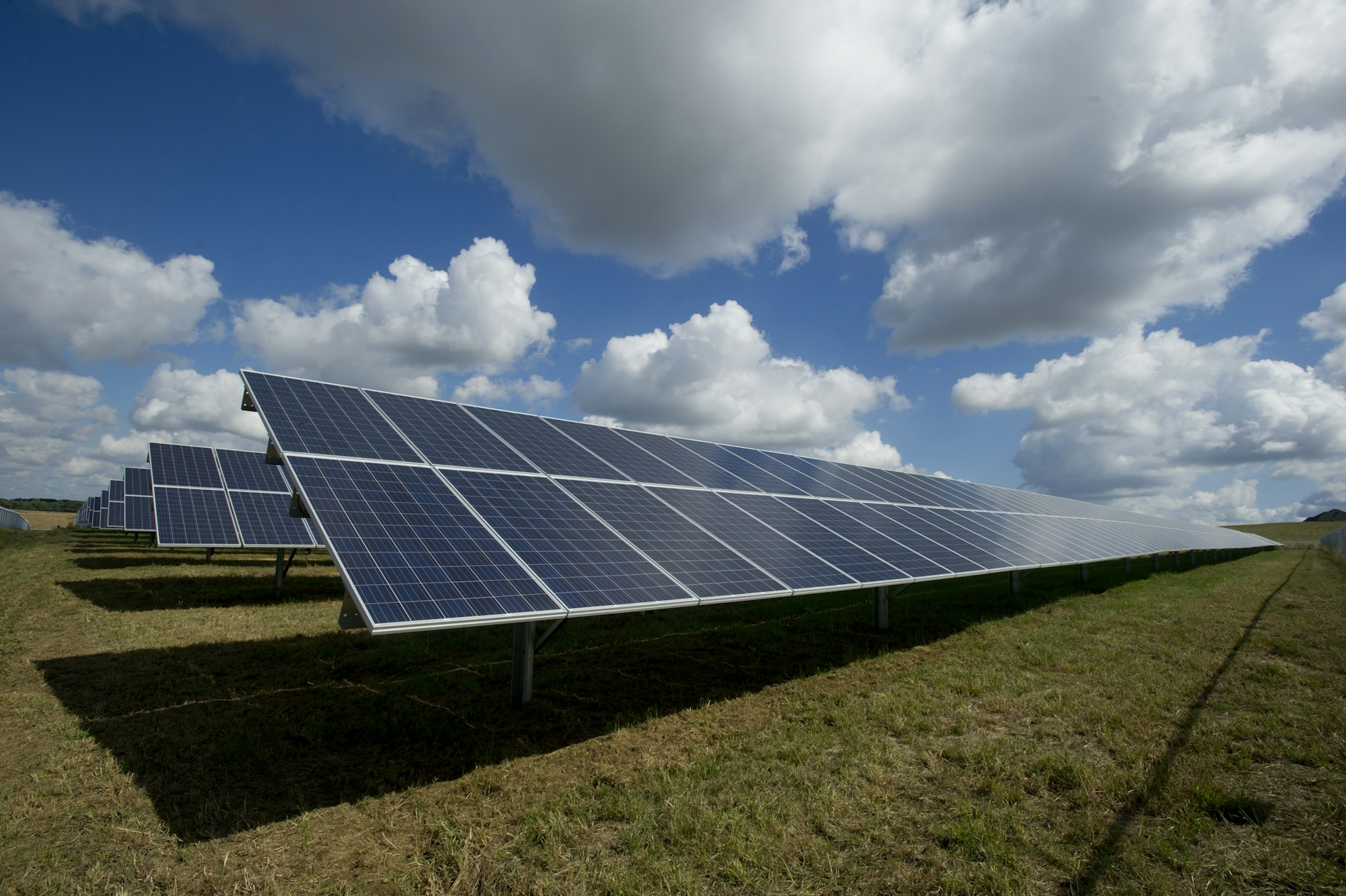
The numbers are staggering. According to the U.S. Energy Information Administration, almost 70 gigawatts of new solar generating capacity is scheduled to come online in 2026 and 2027, representing a 49% increase in U.S. solar operating capacity compared with the end of 2025. Globally, the IEA projects electricity demand will grow at 3.6% annually through 2030 — roughly 50% faster than the pace of the previous decade — with solar PV contributing the largest share of new capacity additions. For energy industry exhibitors preparing for RE+ (formerly Solar Power International), CERAWeek, and Windpower 2026, these figures represent both an unprecedented commercial opportunity and a complex operational challenge.
The IRA Effect: From Policy to Pipeline
The Inflation Reduction Act continues to be the most powerful driver of solar deployment in U.S. history. Since the legislation passed, 155 GW of new production capacity has been announced across the solar supply chain. The IRA is expected to drive an additional 160 GW of solar over the next decade compared to a no-IRA scenario and will catalyze over $565 billion in new investment.
For utility-scale developers, the legislation introduced a critical new option: solar projects can now choose between the Investment Tax Credit (ITC) and the Production Tax Credit (PTC), with the 30% ITC and 2.75 cents per kilowatt-hour PTC remaining available for projects commencing construction by 2032. This flexibility is reshaping project economics and creating new conversations around long-term asset optimization.
However, policy uncertainty has injected volatility. Wood Mackenzie's 2026 solar outlook identifies shifting U.S. policy signals, China's structural market changes, and India's local content requirements as headwinds that exhibitors at RE+ and CERAWeek should be prepared to address on the show floor.
Technology Breakthroughs Are Rewriting the Playbook
Solar panel efficiency continues to shatter records. Trina Solar set a new world record for n-type HJT solar module conversion efficiency at 25.44%, and panels routinely exceed 20% efficiency. But the real story at upcoming trade shows will be the convergence of solar with battery storage, grid-scale management, and AI-powered operations.
Battery Storage Reaches an Inflection Point
Battery pack costs have fallen to $108 per kilowatt-hour and are expected to decline another 3% in 2026, according to Solar Power World's January predictions. At these prices, it is becoming cost-effective to pair solar installations with storage systems that can provide backup for one- to two-day grid outages. For exhibitors selling energy storage solutions, inverters, or battery management systems, the economics have never been more favorable.
"2026 is the year battery storage stops being a nice-to-have addition to solar projects and becomes a fundamental component of every utility-scale bid."
-- Solar Power World, January 2026
China's Capacity Expansion Reshapes Global Supply
China expects to add 180 to 240 GW of new solar PV capacity in 2026 alone, dwarfing every other market. This massive build-out has implications for global module pricing, supply chain dynamics, and trade policy. Exhibitors at CERAWeek, which brings together energy leaders from across the globe, should expect pointed conversations about supply chain diversification and domestic manufacturing incentives.
What the Show Floor Will Look Like in 2026
RE+ takes place November 16-19 in Las Vegas and is expected to draw over 39,000 attendees and 1,350 exhibitors. CERAWeek, held in Houston each March, serves as the energy industry's premier strategic forum. Here is what exhibitors should anticipate across both events:
- Grid integration dominates. As solar capacity grows, the conversation shifts from generation to integration. Exhibitors offering grid management software, utility-scale inverters, and transmission planning tools will find themselves at the center of attention.
- Domestic manufacturing stories resonate. The IRA has sparked over $144 billion in new U.S. investment, and solar manufacturing employment is projected to reach 100,000 by 2033. Companies with domestic supply chain narratives will have a competitive advantage.
- Storage-plus-solar is the baseline. Standalone solar booths will feel incomplete. Attendees expect integrated solutions that address generation, storage, and grid services in a single offering.
- Workforce development is a real concern. Total solar industry employment is expected to nearly double from 263,000 to 478,000 by 2033. Companies offering training, workforce solutions, or simplified installation processes will tap into a pressing industry need.
Windpower and the Broader Renewables Calendar
Solar is not the only story. Rystad Energy identifies five things to watch in the global power sector for 2026, including offshore wind procurement acceleration and grid infrastructure investment. Windpower 2026 offers exhibitors in the wind energy space a dedicated audience, while RE+ increasingly serves as a convergence point for all clean energy technologies.
For companies exhibiting across multiple renewables events, consistency of messaging is essential. The through-line is the same everywhere: the capacity pipeline is massive, the policy environment is supportive but uncertain, and the companies that win will be those offering bankable, proven, integrated solutions.
Preparing Your Exhibit for the Energy Transition
The renewable energy trade show circuit in 2026 is not for the unprepared. Here are the exhibitor strategies that will separate signal from noise on the show floor:
- Quantify everything. Bring third-party validated performance data, customer case studies with specific ROI metrics, and levelized cost comparisons.
- Address policy risk head-on. Have knowledgeable staff who can discuss IRA provisions, tax credit structures, and potential policy shifts without hedging.
- Demonstrate interoperability. Show how your products integrate with major EPC workflows, utility SCADA systems, and industry-standard monitoring platforms.
- Prioritize pre-show outreach. With 39,000+ attendees at RE+, relying on foot traffic alone is a losing strategy. Schedule meetings with target accounts well in advance.
The solar industry is entering its most consequential deployment period. The exhibitors who succeed at RE+, CERAWeek, and Windpower 2026 will be those who match the ambition of the market with the rigor of their preparation.
Capture Every Lead at Your Next Trade Show
Scannly replaces business cards with instant QR code contact exchange. Scan badges, share your info, and export leads in seconds.
Download Scannly FreeGet the Complete Exhibitor Toolkit
19 checklists, spreadsheets, email templates, and guides — everything you need before, during, and after the show.
Get Mega Bundle — $49.99$213.81 — Save 77%