Super Bowl LX Drew 115 Million Viewers — Here's What Trade Show Marketers Should Steal
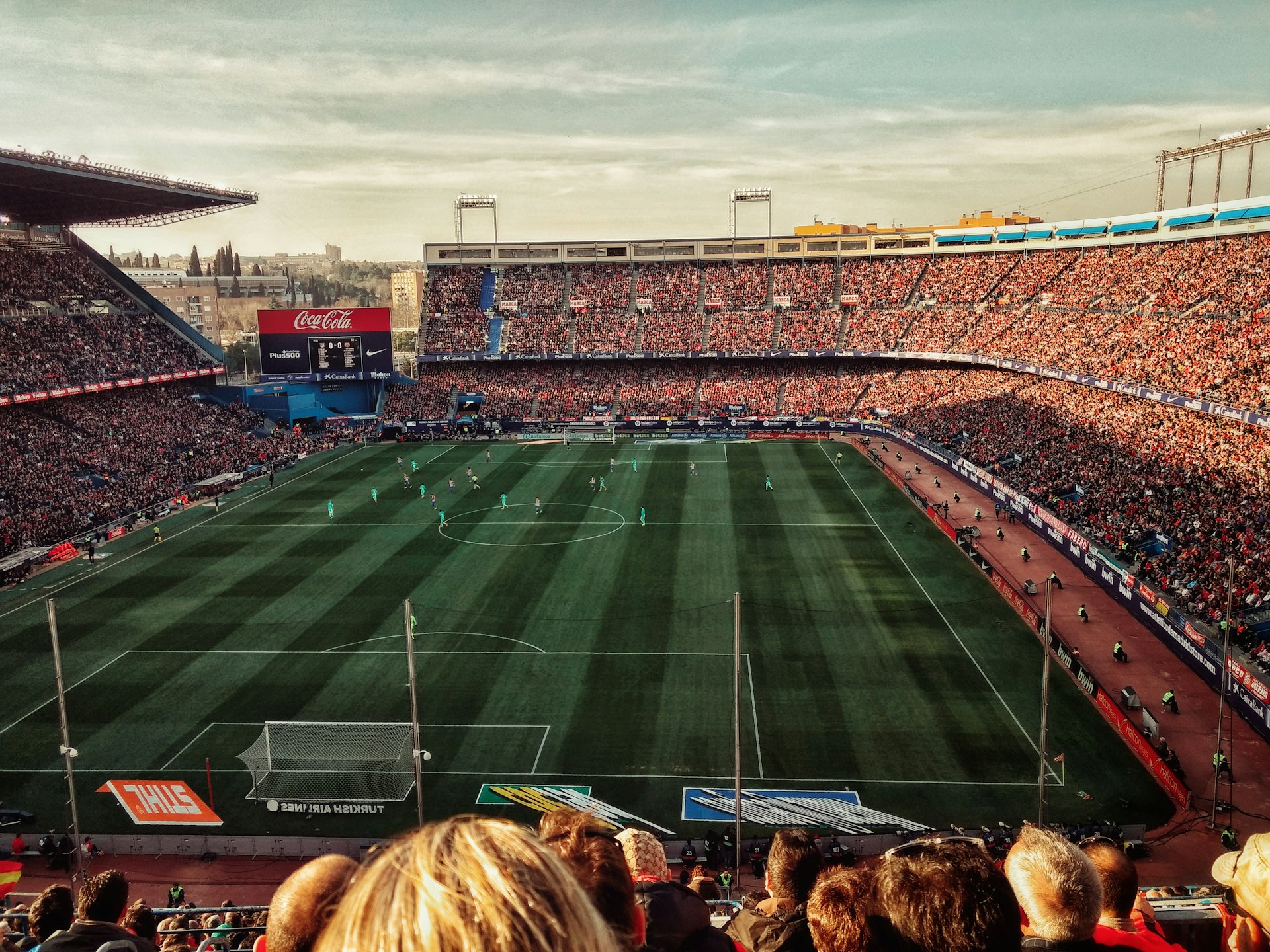
The Seattle Seahawks dismantled the New England Patriots 29-13 last night in Super Bowl LX at Levi's Stadium, and while the football world is dissecting Kenneth Walker III's 135-yard rushing performance and a defense that recorded six sacks, a different kind of professional should be taking notes this morning: trade show exhibitors.
The Super Bowl is not just a football game. It is the most finely tuned live marketing machine on the planet. From the $8 million 30-second ad spots to Bad Bunny's culturally charged halftime spectacle — complete with surprise appearances from Lady Gaga and Ricky Martin — every element of Sunday night was engineered to capture attention, provoke emotion, and convert passive viewers into engaged audiences. That is precisely what your next booth needs to do, just on a different scale.
Here are five lessons from Super Bowl LX that translate directly to the trade show floor.
1. Defense Wins Championships — and Booth Strategy
Seattle's game plan was not subtle. They smothered Drake Maye from the first snap, holding the Patriots scoreless through three quarters. The lesson for exhibitors is counterintuitive but powerful: sometimes the best trade show strategy is not about what you show, but what you prevent.
The best booths create an environment where distractions are eliminated. They control sightlines so attendees are not looking at the competitor across the aisle. They design traffic flow so visitors do not accidentally wander out before the demo is finished. They staff strategically so no prospect stands ungreeted for more than ten seconds.
The Seahawks did not win by being flashier than the Patriots. They won by never giving the Patriots room to breathe. Your booth should do the same to your competitors.
Audit your next booth layout with a defensive mindset. Where are the leaks? Where do prospects escape without a conversation? Plug those gaps before you worry about adding another LED screen.
2. The Kicker Is the MVP — Small Details Compound
Jason Myers set an NFL record with five field goals in a single Super Bowl. Nobody planned for the kicker to be the hero. But when the big plays stalled, those three-pointers added up to a commanding lead.
At trade shows, exhibitors obsess over the hero moments: the keynote slot, the 20-by-20 island booth, the celebrity appearance. But the exhibitors who consistently win are the ones who nail the small, repeatable details — the follow-up email that goes out within two hours of a badge scan, the branded water bottle that keeps your logo in someone's hand all day, the QR code on the back of every staff member's badge that links to a meeting scheduler.
These are your field goals. They are not glamorous, but five of them in a row will outscore one flashy touchdown attempt that falls incomplete.
3. Bad Bunny's Halftime Show Was a Masterclass in Knowing Your Audience
The most polarizing moment of the night was not on the field. Bad Bunny performed entirely in Spanish, brought out Ricky Martin and Lady Gaga, and closed with the message: "The Only Thing More Powerful Than Hate is Love." President Trump called it "one of the worst ever." Fans across Latin America called it historic.
Here is what matters for trade show professionals: Bad Bunny did not try to please everyone. He performed for his audience, knowing full well that specificity creates intensity. The people who loved it became evangelists. The people who did not were never going to buy a Bad Bunny album anyway.
Too many exhibitors design booths and messaging that try to appeal to every attendee on the floor. The result is a bland, forgettable presence that offends no one and excites no one. The best booths in 2026 will be the ones that pick a lane — a specific buyer persona, a specific pain point, a specific industry vertical — and go all in. Let your competitors chase the general audience. You want the passionate niche.
4. The $8 Million Ad Spot Proves Attention Has a Price — Budget Accordingly
Super Bowl ad rates hit $8 million for 30 seconds this year. Brands paid it because the audience is massive, captive, and culturally primed to pay attention to commercials. The parallel to trade shows is direct: the reason exhibition space costs what it does is that you are buying access to a concentrated, qualified, intent-rich audience. No digital campaign can replicate standing three feet from a decision-maker who flew across the country specifically to evaluate solutions like yours.
But here is where most exhibitors stumble. They spend $50,000 on booth space and then allocate $2,000 for pre-show marketing, zero for on-site content creation, and nothing for post-show follow-up. That is the equivalent of buying a Super Bowl ad spot and then airing a commercial you shot on your phone in the parking lot that morning.
The rule of thumb in the trade show industry is that your booth space should represent roughly one-third of your total event investment. The other two-thirds go to design, staffing, travel, pre-show outreach, on-site activation, and post-show nurture campaigns. If you are not budgeting that way, you are leaving the equivalent of millions in pipeline on the table.
5. Every Super Bowl Has a Narrative Arc — So Should Your Booth
Last night's game had a clear story: a dominant Seattle defense suffocating a young quarterback, with Bad Bunny's charged halftime performance as the emotional crescendo. Viewers did not just watch a series of disconnected plays. They experienced a narrative.
Your booth needs the same arc. The best exhibitors design a visitor journey with a beginning (the hook that pulls someone off the aisle), a middle (the demo or conversation that builds understanding), and an end (the clear next step — a meeting booked, a sample shipped, a trial activated). Each phase should feel intentional and connected to the next.
Walk your own booth before the show opens and ask: if a stranger walked this path, would they experience a story? Or would they experience a series of disconnected product sheets and a fishbowl full of business cards?
The Bottom Line
Super Bowl LX cost an estimated $600 million to produce across the game, the broadcast, the halftime show, and the advertising ecosystem surrounding it. Your next trade show will cost a fraction of that, but the principles are identical. Control the environment. Nail the small details. Know your audience. Budget for the full experience, not just the space. And give your visitors a story worth retelling.
The Seahawks are holding the Lombardi Trophy this morning because they executed a plan with discipline and intensity. The exhibitors who do the same will be holding something even more valuable: a pipeline full of qualified leads and a reputation that pulls prospects toward them at every show for the rest of the year.
Related Articles
Exhibitor's Guide to Abu Dhabi National Exhibition Centre
Complete exhibitor guide to Abu Dhabi National Exhibition Centre in Abu Dhabi, United Arab...
Trade Shows in Australia: Complete Exhibitor Guide
Complete guide to exhibiting at trade shows in Australia. Visa requirements, business culture...
Space Industry Trade Shows Are the Fastest-Growing Sector in the Exhibition Business
The $469B commercial space industry is driving explosive trade show growth. Space Symposium...
Trade Shows in India: Complete Exhibitor Guide
Complete guide to exhibiting at trade shows in India. Visa requirements, business culture, venues...
Capture More Leads at Your Next Trade Show
Scannly helps exhibitors scan badges, track leads, and follow up faster — all from your phone.
Try Scannly FreeGet the Complete Exhibitor Toolkit
19 checklists, spreadsheets, email templates, and guides — everything you need before, during, and after the show.
Get Mega Bundle — $49.99$213.81 — Save 77%