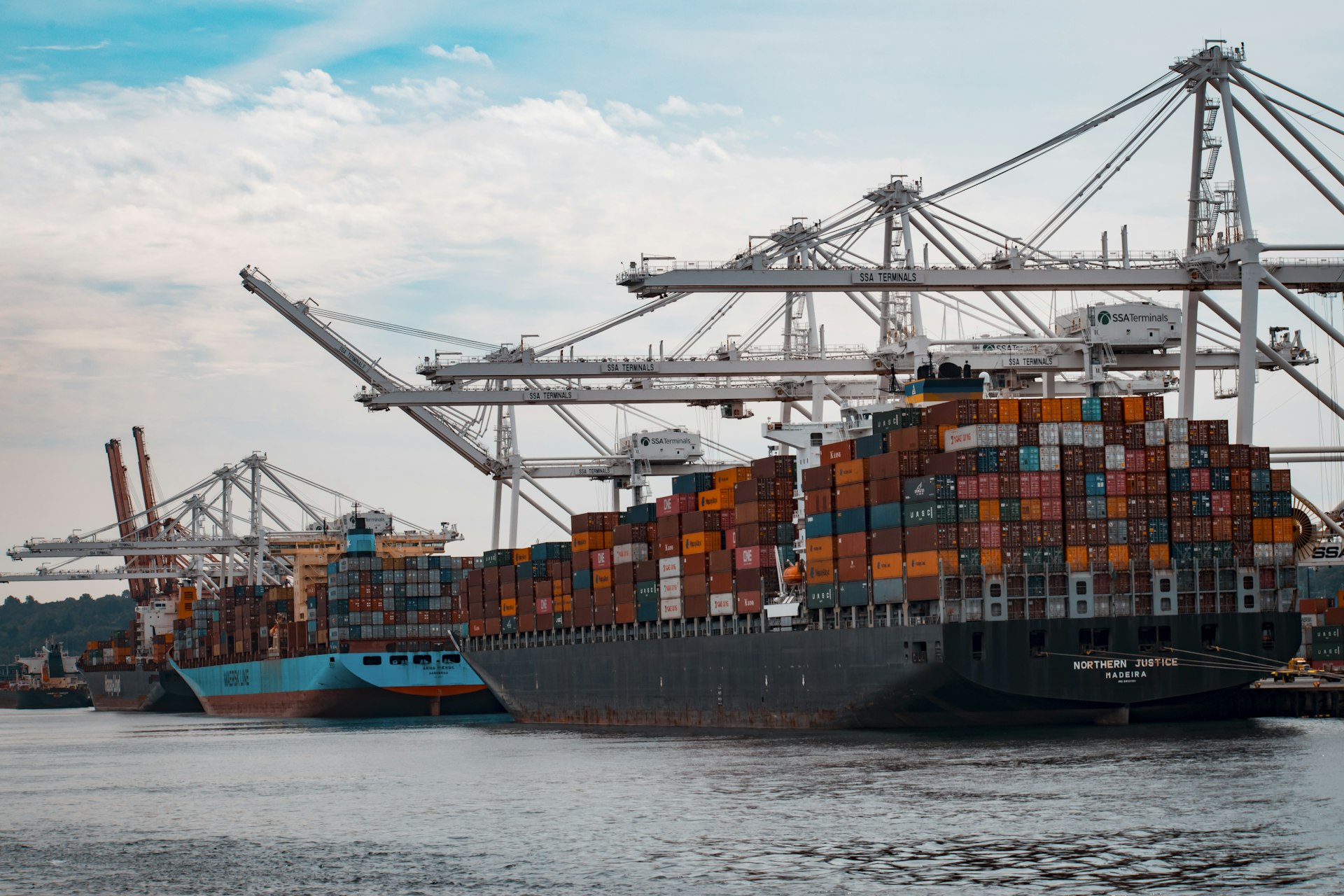
The tariff regime that took full effect in January 2026 is not a policy debate for exhibitors. It is a line item on every purchase order. Canadian lumber and aluminum now carry a 35% import duty. Chinese-manufactured LED panels, display hardware, and electronic components face a 30% tariff. European Union goods — including the precision-engineered modular exhibit systems that dominate the high-end booth market — are subject to a 15% surcharge.
For the average custom exhibit build, materials represent 35-45% of total cost. When those materials jump 15-30% overnight, the math breaks. The $120,000 booth you budgeted in October now costs $140,000 to $155,000 in February. And that budget gap does not come with a corresponding increase in your trade show allocation.
The Material-by-Material Impact
Canadian Lumber and Aluminum: 35% Tariff
Softwood lumber is the structural backbone of custom exhibit construction. Framing, counters, storage rooms, raised floors — all of it starts with dimensional lumber, and Canada has been the primary source for the U.S. market for decades. The 35% tariff on Canadian lumber is now flowing directly into exhibit fabrication quotes. One major fabrication house reported that their lumber costs for Q1 2026 are up 28% compared to Q4 2025, with the remainder of the tariff absorbed into supplier margins that cannot hold much longer.
Aluminum is equally critical. Truss systems, lightweight framing, modular connectors, and the structural elements of virtually every portable and modular exhibit system use extruded aluminum. Canada supplies approximately 40% of U.S. aluminum imports. The 35% tariff adds roughly $800-$1,200 to the cost of a standard 20x20 truss booth and $3,000-$5,000 to a large island exhibit with significant aluminum structure.
Chinese Electronics and Display Hardware: 30% Tariff
The LED video walls, touchscreen kiosks, interactive displays, and digital signage systems that modern exhibits depend on are overwhelmingly manufactured in China. Even products branded by American or European companies are typically assembled in Shenzhen, Dongguan, or Guangzhou. The 30% tariff on Chinese electronics means that the 16-foot LED video wall that cost $22,000 last year now costs $28,600. The interactive touchscreen kiosk that was $4,500 is now $5,850.
AV rental companies are passing these costs through. Show-specific rental rates for LED walls and large-format displays are up 20-25% for spring 2026 shows, according to pricing surveys from three national AV providers.
European Modular Systems: 15% Tariff
The premium modular exhibit systems favored by Fortune 500 exhibitors — German-engineered beMatrix frames, Belgian Aluvision systems, and similar European products — now carry a 15% import duty. These systems were already premium-priced. The tariff pushes them further upmarket, potentially out of reach for mid-market exhibitors who had been upgrading from pipe-and-drape to modular.
"We have three clients who approved European modular system purchases in Q4. All three are now reconsidering. A 15% tariff on a $200,000 system investment is $30,000 that was not in anyone's budget. Two of them are looking at domestic alternatives they would not have considered six months ago."
— Brian Fitzgerald, CEO, Exhibit Concepts Inc.
The Canadian Exhibitor Exodus
The tariff story has a second dimension that is reshaping the show floor itself: international exhibitor participation is collapsing. Canadian companies that routinely exhibited at U.S. trade shows are pulling back at unprecedented rates.
The Canadian government imposed retaliatory tariffs on U.S. goods within days of the new U.S. tariff schedule. Combined with the weakened Canadian dollar — now trading at $0.68 USD — the economics of exhibiting in the United States have become brutal for Canadian companies. Booth space paid in U.S. dollars, shipping across a border now subject to duties in both directions, and the reputational risk of appearing at an American show while the two governments are engaged in a trade war.
Show organizers in industries with heavy Canadian participation — natural resources, agriculture, manufacturing, automotive — are reporting cancellation rates they have never seen. One organizer of a major manufacturing show told us that Canadian exhibitor registrations for their spring 2026 event are down 70% year-over-year. That is not a dip. That is a structural absence that leaves empty booth space, reduces attendee draw, and weakens the show for every remaining exhibitor.
How Exhibitors Should Respond
1. Audit Your Materials Supply Chain
Ask your exhibit builder exactly where their materials originate. Not where they buy them — where they are manufactured. Lumber from Canada, aluminum from Canada, LEDs from China, modular frames from Europe. Map every tariff-exposed input. Then ask for quotes using domestically sourced alternatives. Domestic lumber from the Pacific Northwest and Southeast is available, though at higher baseline prices. Domestic aluminum from companies like Alcoa and Century Aluminum exists but faces capacity constraints. The point is to understand your exposure before your next invoice arrives with a surprise.
2. Use Rental Systems as a Tariff Hedge
Rental exhibit systems that were purchased and imported before the tariffs took effect are sitting in warehouses right now at pre-tariff cost basis. Renting one of those systems for your next show avoids the tariff entirely. This is a temporary arbitrage — rental prices will eventually adjust — but for 2026 shows, renting may be significantly cheaper than building or buying new. Ask your exhibit house about their rental inventory and when those units were acquired.
3. Renegotiate Show Budgets With Real Numbers
If your trade show budget was set in 2025 using 2025 pricing, it is already obsolete. Bring your CFO the specific tariff impacts on your exhibit program: the percentage increase on materials, the higher AV rental rates, the increased shipping costs. Frame it as a market condition, not a request for more money. Show the ROI math at the new cost basis. If the show still delivers positive ROI at 15-30% higher costs, the budget increase is justified. If it does not, you need to know that now, not after you have committed the spend.
4. Explore Domestic Fabrication Alternatives
The tariff environment is accelerating a reshoring trend in exhibit fabrication. Several U.S.-based manufacturers are expanding capacity to produce LED displays, modular framing systems, and digital signage components domestically. They are not yet at price parity with pre-tariff Chinese imports, but the gap is narrowing rapidly. Investing in domestic vendor relationships now positions you ahead of the wave when these suppliers hit scale.
"Tariffs are doing what the industry should have done voluntarily: reducing dependence on single-source international supply chains. It is painful in the short term, but the exhibit industry that emerges from this will be more resilient and more domestically grounded."
— Cathy Breden, CEO, International Association of Exhibitions and Events (IAEE)
What Show Organizers Must Do
The 70% drop in Canadian exhibitor participation is a five-alarm fire for show organizers. Empty booths depress attendee experience, reduce networking value, and create a visual impression of decline that feeds on itself. Organizers need to act aggressively: offer discounted rates to fill vacated Canadian booths with domestic exhibitors, create international pavilion programs that aggregate smaller foreign exhibitors who cannot justify standalone booths, and advocate publicly for tariff exemptions on trade show goods.
IAEE and CEIR have both issued statements urging the administration to consider temporary tariff exemptions for goods used in trade show exhibitions, arguing that the industry generates $101 billion in annual economic activity and supports 2.6 million jobs. Whether those appeals gain traction is uncertain. What is certain is that the current tariff regime is restructuring the economics of every trade show in America, and exhibitors who do not adapt their strategies will pay the price — literally.
Related Articles
59% of Small Businesses Were Hacked Last Year — Cybersecurity Trade Shows Have Never Mattered More
The Hiscox survey found 59% of small businesses were successfully attacked in 2025. RSA Conference...
Exhibitor's Guide to Poznan International Fair
Complete exhibitor guide to Poznan International Fair in Poznan, Poland. Layout, services, nearby...
Exhibitor's Guide to BITEC
Complete exhibitor guide to BITEC in Bangkok, Thailand. Layout, services, nearby hotels, transport...
Exhibitor's Guide to Orange County Convention Center
Complete exhibitor guide to Orange County Convention Center in Orlando, United States. Layout...
Capture Every Lead at Your Next Trade Show
Scannly replaces business cards with instant QR code contact exchange. Scan badges, share your info, and export leads in seconds.
Download Scannly FreeGet the Complete Exhibitor Toolkit
19 checklists, spreadsheets, email templates, and guides — everything you need before, during, and after the show.
Get Mega Bundle — $49.99$213.81 — Save 77%