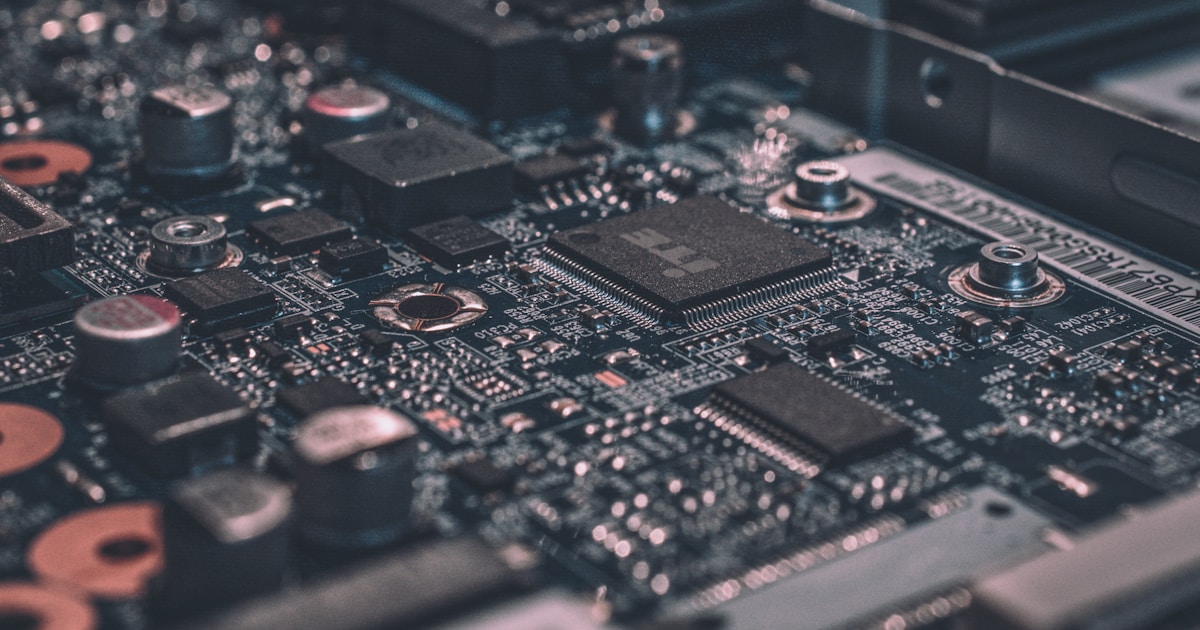
Jensen Huang does not do small reveals. When the NVIDIA CEO told investors in late January that GTC 2026 would feature a chip designed to "surprise the world," the statement ricocheted through Silicon Valley boardrooms, semiconductor fabrication plants, and the calendars of every trade show professional in tech. Three weeks before the San Jose Convention Center opens its doors on March 16, hotel blocks within a five-mile radius are sold out, exhibitor waitlists have tripled compared to last year, and at least four Fortune 50 CEOs have confirmed front-row seats for the opening keynote. Whatever Huang is planning, the trade show industry is paying attention—because GTC has become the blueprint for how a single company's developer conference can eclipse entire multi-vendor mega-shows in influence, media coverage, and deal velocity.
This is not hyperbole. In 2025, GTC drew more mainstream press coverage than CES, generated more enterprise purchase orders per attendee than any GSMA event, and produced a stock-price reaction measured in hundreds of billions of dollars. Now, with NVIDIA sitting atop a $3.3 trillion market capitalization and controlling an estimated 80-90% of the AI accelerator market, GTC 2026 is poised to be less a conference and more a global economic event with a registration badge.
The Chip That Will "Surprise the World"
Speculation is a currency in the semiconductor world, and right now, it is trading at all-time highs. During NVIDIA's Q4 FY2026 earnings call, Huang dropped a line that analysts are still parsing: the company would unveil silicon at GTC capable of reducing inference costs by "4X to 10X" compared to current Blackwell architecture. That is not an incremental improvement. That is a generational leap compressed into a single product cycle, the kind of announcement that reshapes not just NVIDIA's roadmap but the economics of every company building on top of AI infrastructure.
The leading theory among industry watchers centers on what insiders are calling "Blackwell Ultra"—a successor to the B200 GPU that reportedly combines architectural refinements in the transformer engine with a dramatically expanded memory bandwidth. Some analysts point to NVIDIA's recent patent filings around chiplet-based designs that could allow modular scaling of inference workloads. Others believe Huang is preparing to unveil an entirely new product category: a purpose-built inference accelerator that sits alongside the Blackwell training GPUs rather than replacing them.
What makes this announcement trade-show-relevant is its timing and staging. Huang could have revealed the chip during an earnings call, a press release, or a private briefing. Instead, he chose GTC—a live event with cameras, exhibitors, and an audience that will react in real time. That choice is deliberate. NVIDIA understands that the theater of a trade show keynote amplifies a product launch in ways that digital-only channels cannot replicate. The gasps, the applause, the immediate hallway conversations that turn into purchase orders—these are the compounding effects of physical presence that no webinar can match.
GTC's Evolution: From GPU Niche to AI Mega-Show
To appreciate what GTC 2026 represents, you need to understand the trajectory. In 2012, GTC was a developer conference attended primarily by graphics programmers and academic researchers working on CUDA parallel computing. The exhibit hall was modest. The keynotes were technical. The mainstream press ignored it entirely.
Then deep learning happened. NVIDIA's GPUs turned out to be the ideal hardware for training neural networks, and what had been a niche event for rendering enthusiasts became the annual gathering point for the most consequential technology shift since the internet. By 2018, GTC was drawing healthcare executives, automotive engineers, financial quants, and defense contractors. By 2023, the waitlist for keynote seating exceeded the capacity of most standalone trade shows.
The Attendance Inflection Point
GTC 2025 marked a turning point. NVIDIA reported that attendee demographics had shifted decisively: for the first time, more than half of in-person attendees identified their primary role as "business decision-maker" rather than "developer" or "researcher." C-suite attendance jumped 340% compared to 2023. The exhibit hall, once dominated by GPU workstation vendors and academic poster sessions, now featured booths from McKinsey, Deloitte, and every major cloud provider.
This shift created a feedback loop. As more executives attended, more exhibitors wanted space. As more exhibitors secured space, the programming expanded to include business-track sessions alongside the deep technical content. And as the programming broadened, even more executives registered, attracted by the promise of being in the room where the future was being built.
Why GTC Matters for Every Trade Show Professional
GTC's transformation offers three lessons that apply to any industry event:
- Platform gravity beats vendor neutrality. GTC is openly an NVIDIA event, yet competitors exhibit there because the audience is too valuable to ignore. When one company controls the ecosystem, its conference becomes the de facto industry show.
- Keynote theater drives deal flow. The live reveal format generates urgency that asynchronous communication cannot. Exhibitors report that booth traffic spikes 400-500% in the two hours following a Huang keynote.
- Cross-industry attendance creates unexpected connections. A healthcare AI startup sitting next to a robotics company leads to partnerships that neither company's sales team would have identified through digital prospecting alone.
- Content depth is a moat. With 900+ sessions, GTC provides enough technical depth that attendees justify multi-day attendance and travel budgets, even in an era of virtual alternatives.
Physical AI: The New Demo Category That Changes Everything
Perhaps the most consequential shift at GTC 2026 is the introduction of "Physical AI" as a formal demonstration category. NVIDIA has been building toward this moment for years, investing billions in robotics platforms (Isaac), autonomous vehicle simulation (DRIVE), and digital twin technology (Omniverse). At GTC 2026, these threads converge into a unified exhibit area where attendees will see AI systems that interact with the physical world in real time.
The Physical AI demonstration zone is expected to occupy more than 40,000 square feet of the exhibit hall—larger than the entire GTC exhibit floor was in 2019. Confirmed demonstrations include autonomous mobile robots navigating dynamic warehouse environments, humanoid robots performing assembly tasks directed by natural language instructions, and digital twin simulations of entire factory floors that update in real time based on sensor data.
For trade show professionals, this matters because it represents a new category of experiential exhibit that blurs the line between product demo and immersive installation. Attendees will not just watch a presentation about physical AI; they will walk through environments where AI-powered machines are operating around them. This is the kind of show-floor experience that cannot be replicated virtually—you need to feel the robot move past you to understand the technology's readiness.
The Robotics Exhibitor Surge
NVIDIA has confirmed that the number of robotics-related exhibitors at GTC 2026 has increased by 280% compared to 2025. This includes established players like Fanuc, ABB, and Boston Dynamics alongside dozens of startups building on NVIDIA's Isaac and Cosmos platforms. The robotics exhibitor surge reflects a broader industry consensus: physical AI is moving from research to deployment faster than most forecasters predicted, and GTC is where the deals that accelerate that transition will be signed.
Several exhibitors told ShowFloorTips that they specifically chose GTC over traditional robotics events like Automate or IREX because the cross-industry audience at GTC provides access to buyers from sectors—healthcare, logistics, agriculture, construction—that specialized robotics shows struggle to attract.
How to Prepare for GTC 2026 as an Exhibitor
Whether you are a first-time exhibitor or a GTC veteran, this year's show demands a revised playbook. The competitive intensity on the show floor is higher than ever, the audience is more diverse, and the window for capturing attention is measured in seconds. Here is what the most prepared exhibitors are doing differently.
Pre-Show Strategy: Start 30 Days Out
The most effective GTC exhibitors begin their outreach campaigns a full month before the show opens. This means identifying target attendees through NVIDIA's matchmaking platform, scheduling booth meetings in advance, and creating content that aligns with the keynote themes NVIDIA has pre-announced. In 2025, exhibitors who scheduled at least 15 pre-booked meetings reported 3.2X higher lead quality compared to those relying solely on walk-up traffic.
This year, with the "surprise chip" announcement dominating pre-show buzz, smart exhibitors are preparing two sets of messaging: one for the scenario where the chip matches expectations, and one for the scenario where Huang unveils something unexpected. The ability to pivot messaging within hours of the keynote is a competitive advantage that separates top-performing exhibitors from the rest.
Booth Design: Demonstrate, Don't Decorate
GTC audiences are technically sophisticated and time-constrained. Booth designs that prioritize aesthetics over demonstration consistently underperform. The highest-performing booths at GTC 2025 shared three characteristics: a live demo visible from the aisle (average dwell time: 4.2 minutes), a clearly stated value proposition readable from 15 feet away, and a dedicated meeting space for deeper conversations.
Lead Capture: Speed Is the Only Metric That Matters
At a show where 25,000 attendees are moving between 900 sessions, the window for capturing a lead is vanishingly small. Every second spent fumbling with a business card or typing contact information into a spreadsheet is a second lost. The exhibitors who dominate GTC lead generation use instant badge-scan systems that capture contact data in under two seconds and automatically sync to their CRM before the attendee has left the booth.
Post-show follow-up velocity matters equally. Data from GTC 2025 shows that leads contacted within four hours of the interaction converted at 2.8X the rate of leads contacted after 24 hours. The best exhibitors have their follow-up sequences pre-written and automated, triggered by the badge scan itself.
Capture Every GTC Lead in Under 2 Seconds
Scannly's AI-powered badge scanning turns every booth conversation into an instant CRM entry. No typing. No lost cards. Just qualified leads flowing directly into your pipeline before the attendee reaches the next booth.
Get Scannly for GTC 2026Cross-Industry Attendance: Who Is Actually Coming to GTC
The diversity of GTC's attendee base is what makes it uniquely valuable—and uniquely challenging for exhibitors trying to target specific segments. Based on registration data NVIDIA has shared with partners and ShowFloorTips' own sourcing, the 2026 attendee mix breaks down along lines that would be unrecognizable to anyone who attended GTC a decade ago.
Technology companies still form the largest single segment, accounting for roughly 35% of attendees. But the remaining 65% is fragmented across healthcare (12%), automotive (11%), financial services (10%), manufacturing (9%), energy (7%), government and defense (6%), retail (5%), and a long tail of other verticals. This fragmentation means that a robotics company exhibiting at GTC may find itself in conversation with a hospital CTO, a hedge fund quantitative researcher, and an oil-field services engineer in the span of a single hour.
The Enterprise Buyer Shift
The most significant trend in GTC attendance is the accelerating presence of enterprise buyers—not engineers evaluating technology, but executives with budget authority making purchasing decisions. NVIDIA has actively cultivated this shift by creating dedicated "Executive Summit" programming that runs parallel to the technical sessions. The Executive Summit features intimate, invite-only roundtables with NVIDIA leadership, private demonstrations of pre-release technology, and networking dinners that have become some of the most sought-after invitations in Silicon Valley.
For exhibitors, the Executive Summit represents both an opportunity and a challenge. The opportunity is obvious: direct access to decision-makers at the world's largest companies. The challenge is that these executives move through the show on carefully curated schedules, rarely wandering the exhibit hall without purpose. Reaching them requires pre-show relationship building, strategic booth placement near Executive Summit venues, and messaging sophisticated enough to resonate with someone who evaluates billions of dollars in technology investments annually.
Connected Shows: The GTC Effect on the 2026 Trade Show Calendar
GTC does not exist in isolation. Its gravitational pull reshapes the calendars, strategies, and expectations of every other tech trade show in the first half of the year. Understanding these connections is essential for any exhibitor planning a multi-show strategy.
NVIDIA GTC 2026
The epicenter. Every announcement made here sets the agenda for subsequent shows. Exhibitors should treat GTC as the launchpad for messaging that will carry through Q2.
View full show profile →MWC Barcelona 2026
Two weeks before GTC, MWC provides the telecom and connectivity context. AI infrastructure announcements at MWC often preview what NVIDIA formalizes at GTC.
View full show profile →COMPUTEX Taipei 2026
The supply-chain response to GTC. Component manufacturers and ODMs at COMPUTEX build products around the architectures Huang unveils in March.
View full show profile →CES 2026
CES sets the consumer AI narrative each January. GTC three months later provides the infrastructure layer that makes CES product announcements possible.
View full show profile →HIMSS 2026
Healthcare IT's flagship event increasingly features NVIDIA-powered solutions. GTC's healthcare track has become a must-attend complement to HIMSS.
View full show profile →The Economics of GTC Exhibition: Is It Worth the Investment?
Let's talk numbers, because exhibiting at GTC is not cheap. Booth space for 2026 is priced at approximately $85-$120 per square foot depending on location, with premium positions near the keynote hall commanding significant premiums. A standard 10x10 booth with basic furnishings runs approximately $15,000-$25,000 for space alone. Add custom build-out, staffing, travel, and marketing collateral, and a mid-tier exhibitor can expect to spend $75,000-$150,000 for a four-day presence.
But the ROI data tells a compelling story. Based on ShowFloorTips' survey of 2025 GTC exhibitors, the median cost per qualified lead at GTC was $127—significantly lower than the $340 median reported at comparable tech conferences. The difference is driven by GTC's attendee density and intent: people come to GTC to evaluate and purchase technology, not to collect swag bags and attend cocktail hours.
The Hidden Cost: Opportunity
What the raw cost figures don't capture is the opportunity cost of not being at GTC. Several companies that skipped GTC 2025 told ShowFloorTips they regretted the decision after watching competitors close deals with prospects they had been nurturing for months. In a market where AI infrastructure purchasing decisions are being made on compressed timelines, the company that shows up with a live demo wins over the company that sends a follow-up email.
This dynamic creates a self-reinforcing attendance cycle. Companies exhibit because their competitors exhibit, which increases the show's value to attendees, which attracts more attendees, which makes the show more valuable to exhibitors. GTC has reached the critical mass where absence is more conspicuous than presence.
What Huang's "Surprise" Means for the Broader Trade Show Industry
Step back from the chip specifications and consider what GTC 2026 reveals about the state of trade shows in 2026. The pandemic-era prediction that virtual events would replace in-person shows has been thoroughly disproven—but the shows that survived and thrived are fundamentally different from their pre-2020 predecessors.
GTC exemplifies the new model: a show anchored by a must-attend keynote that creates a shared cultural moment, surrounded by technical depth that justifies multi-day attendance, and populated by an audience whose cross-industry diversity generates serendipitous connections impossible to engineer digitally. The "surprise chip" is not just a product announcement; it is a narrative device that creates urgency. Attendees know that being in the room when Huang makes the reveal will give them an information advantage measured in hours or days over competitors watching from home.
The Keynote-Industrial Complex
Huang's approach has spawned imitators. Apple, Google, Meta, and Amazon have all restructured their developer conferences to emphasize keynote theater and live reveals. But none have achieved GTC's particular alchemy of technical credibility, executive gravitas, and product impact. The reason is structural: NVIDIA controls the platform layer that every other AI company depends on, which means its announcements have cascading effects across the entire technology stack. A new chip from NVIDIA changes the cost curves for OpenAI, Google DeepMind, Meta's Llama models, and thousands of startups simultaneously.
For trade show organizers in other industries, the lesson is clear: the most valuable shows are the ones where announcements made on stage have immediate, measurable consequences for attendees' businesses. If your keynote content does not change how attendees think about their next quarter's strategy, your show is at risk of being relegated to "nice to attend" rather than "must attend."
GTC 2026 Exhibitor Checklist
- Register now. Waitlist positions are being assigned. Late registrants may be placed in overflow halls with lower foot traffic.
- Book hotels immediately. Downtown San Jose inventory within walking distance of the convention center is nearly exhausted. Consider properties along the VTA light rail line.
- Prepare dual messaging. Have launch-day creative ready for both expected and unexpected chip announcements. Agility in the first 60 minutes post-keynote is critical.
- Invest in lead capture technology. Badge-scan-to-CRM in under two seconds is the baseline, not the aspiration.
- Schedule pre-show meetings. Use NVIDIA's matchmaking platform to book at least 20 targeted meetings before you arrive.
- Plan your post-show sequence. Have follow-up emails drafted and automation triggers configured before the show starts.
- Staff for diversity. Your booth team needs both deep technical knowledge (for developer attendees) and business acumen (for executive buyers).
The Road to March 16: What to Watch
Between now and GTC, several developments will shape the show's impact. NVIDIA's investor day on March 3 may provide additional hints about the chip reveal. Competitor announcements from AMD (expected in early March) and Intel (which has its own Vision conference scheduled for April) will establish the competitive context. And the broader macroeconomic environment—particularly the trajectory of AI infrastructure spending by hyperscale cloud providers—will determine whether GTC 2026 takes place against a backdrop of exuberance or caution.
Regardless of the macro environment, one thing is certain: GTC 2026 will be the most consequential tech trade show of the year. Jensen Huang has spent three decades building NVIDIA into the most valuable company on earth, and he has spent equally long perfecting the art of the trade show keynote. On March 16, those two achievements converge in a single room in San Jose. Every exhibitor, attendee, and industry observer should be paying attention.
The chip that surprises the world is coming. The only question is whether you will be in the room when it arrives—or reading about it the next morning.
Don't Miss a Single Lead at GTC 2026
With 25,000+ attendees and 900+ sessions, every second on the show floor counts. Scannly ensures your team captures, qualifies, and follows up with every prospect automatically.
Start Your Free Trial