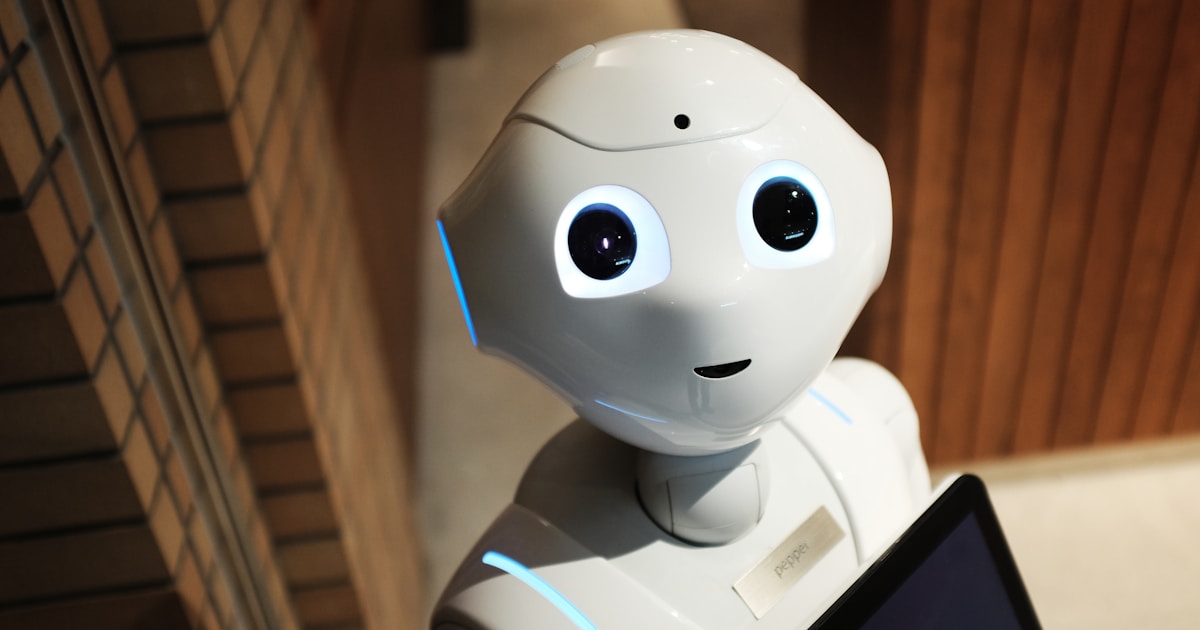
When Honor takes the stage at Mobile World Congress 2026 in Barcelona this week, the company will not be showing a new phone. It will not be unveiling a tablet, a laptop, or a pair of smart glasses. Honor will be introducing a humanoid robot—an AI-powered, bipedal machine designed for consumer environments—and in doing so, the Chinese technology giant will be making the most consequential product announcement in MWC's 39-year history. The robot, which Honor has been developing in partnership with an undisclosed robotics engineering firm, represents the first serious attempt by a major consumer electronics brand to bring humanoid robotics from the research laboratory to the living room.
The announcement is extraordinary on its own merits, but it is equally significant for what it reveals about the enduring power of trade shows as product launch platforms. In an era when companies can reach millions of consumers through a YouTube livestream or a carefully curated social media campaign, Honor chose MWC—a physical, in-person trade show in a convention center on the Mediterranean coast—as the venue for arguably the most ambitious product reveal in the consumer electronics industry this decade. That choice is not accidental, and it tells us something important about why trade shows continue to matter in ways that digital channels cannot replicate.
This article examines Honor's humanoid robot announcement, places it within the context of the explosive growth in global robotics, and makes the case—with historical evidence—that trade shows remain the definitive platform for product launches that reshape industries.
What Honor Is Actually Building
Details about Honor's humanoid robot remain tightly controlled ahead of the official MWC reveal, but information from supply chain sources, patent filings, and the company's own carefully calibrated teasers paint a picture of a product that is more practical than science fiction.
The robot is understood to stand approximately 5 feet 6 inches tall and weigh around 120 pounds, dimensions that place it in the same category as Tesla's Optimus prototype and Figure AI's Figure 02, but with a crucial distinction: Honor is positioning this machine as a consumer product rather than an industrial tool. Where Tesla and Figure have focused on warehouse and manufacturing applications, Honor is reportedly targeting domestic environments—the home, the small office, the retail storefront.
The AI architecture powering the robot is believed to be based on Honor's MagicOS platform, extended with a multimodal large language model that integrates visual processing, natural language understanding, spatial awareness, and physical manipulation. The robot is expected to perform practical household tasks—fetching and carrying objects, basic cleaning, physical security monitoring, elder care assistance—while also functioning as an embodied AI assistant that can engage in natural conversation, manage smart home devices, and serve as a physical interface for digital services.
The Technical Challenges
Building a humanoid robot for consumer environments presents engineering challenges that are fundamentally different from industrial robotics. Factory robots operate in controlled environments with predictable surfaces, known obstacles, and no children, pets, or fragile objects. A consumer humanoid robot must navigate carpeted floors, hardwood, tile, and stairs. It must recognize and safely interact with people of all ages and sizes. It must handle objects that range from a glass of water to a bag of groceries to a sleeping cat. And it must do all of this reliably enough that consumers trust it in their homes, where the tolerance for malfunction is essentially zero.
Honor's approach to these challenges appears to involve a hybrid architecture that combines pre-programmed motor skills for common tasks with real-time AI adaptation for novel situations. Patent filings suggest the robot uses a combination of LiDAR, stereo cameras, and force-feedback sensors to build a continuously updated 3D model of its environment, enabling it to navigate dynamically and handle unexpected obstacles. The manipulation system uses compliant actuators—motors that can absorb unexpected forces rather than rigidly resisting them—which is essential for safe operation around humans.
The pricing has not been officially announced, but industry analysts expect Honor to target a launch price between $15,000 and $25,000—significantly lower than the $50,000-plus range that has characterized previous humanoid robot prototypes. That price point, while still far from mass-market, positions the robot as accessible to affluent early adopters and small businesses, creating the installed base that Honor needs to iterate and drive costs down over subsequent generations.
The 500% Surge: Understanding the Robotics Market Explosion
Honor's decision to enter the humanoid robot market did not happen in a vacuum. It is a response to one of the most dramatic market expansions in recent technology history. The global robotics market surged approximately 500 percent in 2025, driven by a convergence of advances in AI, materials science, battery technology, and manufacturing economics that has made robots dramatically more capable and less expensive to produce.
Several factors are driving this explosion. First, the large language model revolution that began with ChatGPT in late 2022 has provided robots with a cognitive layer that was previously impossible. Before LLMs, robots could perform pre-programmed physical tasks but could not understand natural language instructions, interpret ambiguous situations, or engage in the kind of contextual reasoning that real-world environments demand. The integration of multimodal AI models into robotic platforms has essentially given robots the ability to think, plan, and communicate in ways that make them genuinely useful outside of factory settings.
Second, battery technology has reached a tipping point. The energy density improvements driven by the electric vehicle industry have produced battery cells that can power a humanoid robot for 4 to 8 hours of active operation—enough for a meaningful work shift or a full day of intermittent domestic use. Five years ago, the best available batteries would have given a similarly sized robot 60 to 90 minutes of operation, making it impractical for any real-world application.
Third, the cost of actuators, sensors, and computing hardware has declined precipitously. The motors that drive robotic joints, the cameras and LiDAR systems that provide spatial awareness, and the processors that run AI models have all benefited from scale economics driven by adjacent industries—electric vehicles, autonomous driving, smartphones, and data centers. A humanoid robot that would have cost $200,000 to build in 2020 can now be manufactured for $8,000 to $12,000 in component costs, making consumer-oriented pricing feasible for the first time.
Why Trade Shows Remain the Premier Product Launch Platform
Honor's choice to reveal its humanoid robot at MWC rather than through a digital-only event deserves serious analysis, because it represents a deliberate strategic decision by a company that is intimately familiar with digital marketing channels. Honor has the social media following, the influencer relationships, and the digital content capabilities to execute a purely online product launch. It chose not to. Understanding why illuminates something fundamental about the enduring value of trade shows.
The Physics of Credibility
A humanoid robot that exists only in a promotional video is a concept. A humanoid robot that walks across a trade show stage in front of 3,000 journalists, analysts, and industry executives is a product. The difference is not semantic; it is physical. When Honor puts a bipedal robot on the MWC stage and lets it interact with audience members, navigate obstacles, and demonstrate practical capabilities in an uncontrolled environment, the company is making a credibility statement that no amount of rendered footage or carefully edited video can match.
This is particularly important for a product category that has been plagued by overpromising and underdelivering. The history of consumer robotics is littered with impressive demo videos that turned out to be cherry-picked best-case scenarios, carefully staged environments, or outright fabrications. By demonstrating at a trade show—where journalists can ask unscripted questions, where competitors are watching from the next booth, and where any malfunction will be captured by a hundred smartphone cameras—Honor is accepting a level of scrutiny that validates its technology claims in a way that no controlled presentation can.
The Concentration of Decision Makers
MWC 2026 is expected to draw more than 101,000 attendees, including executives from every major telecommunications carrier, consumer electronics retailer, technology investor, and media outlet on earth. For Honor, this concentration of decision makers creates an efficiency of influence that would take months to replicate through individual meetings, roadshows, or digital outreach. In three days on the show floor, Honor can brief every telecom CEO who might bundle the robot with service plans, every electronics retailer who might stock it, every technology investor who might fund the next generation, and every journalist who will shape public perception of the product.
The informal networking that happens at trade shows is equally valuable. The conversations in the hallways, the dinners in Barcelona's Gothic Quarter, the chance encounters at the booth of a complementary exhibitor—these unstructured interactions generate partnerships, distribution agreements, and strategic insights that formal business development processes cannot produce at the same speed or quality.
Why Companies Choose Trade Shows for Landmark Product Launches
- Physical credibility: Live demonstrations in uncontrolled environments prove that the technology works, not just that the marketing team can produce compelling video.
- Decision-maker density: Thousands of buyers, investors, partners, and media in one location for three days creates unmatched influence efficiency.
- Competitive context: Launching alongside competitors forces the market to evaluate your product in real time, creating immediate positioning in the competitive landscape.
- Media amplification: Trade show launches generate earned media coverage that exceeds what most companies can achieve through paid channels, with higher credibility.
- Partnership acceleration: Informal conversations and chance encounters at trade shows generate business relationships at a pace that formal BD processes cannot match.
- Market feedback: Real-time reactions from knowledgeable professionals provide product validation and improvement insights that no focus group can replicate.
A History of Trade Show Product Launches That Changed Industries
Honor's MWC moment joins a long and distinguished lineage of trade show product launches that altered the trajectory of entire industries. Reviewing this history reinforces the argument that for truly transformative products, there is no substitute for the trade show stage.
The iPhone at Macworld 2007
When Steve Jobs walked onto the stage at the Moscone Center in San Francisco on January 9, 2007, and introduced "three revolutionary products"—a widescreen iPod, a mobile phone, and an internet communicator—before revealing they were all one device, he was using a trade show (Macworld Conference & Expo) as the launch platform for the most consequential consumer product of the 21st century. Jobs understood that the iPhone needed the concentrated attention of thousands of journalists, developers, and industry executives to achieve immediate cultural impact. A press release could not have accomplished what that live demonstration achieved in 90 minutes.
The First IBM PC at COMDEX 1981
IBM's personal computer, the machine that created the PC industry and ultimately put a computer on every desk in the world, was unveiled at the COMDEX trade show in Las Vegas in November 1981. IBM chose COMDEX because it was the computing industry's gathering point, and IBM's engineers wanted to demonstrate the PC to the software developers and peripheral manufacturers whose support would determine its success. The partnerships formed at that single trade show—including the relationship with a small Seattle software company called Microsoft—defined the technology industry for the next four decades.
HDTV at CES 1998
The Consumer Electronics Show has been the launch platform for dozens of category-defining products, but the coordinated introduction of high-definition television by multiple manufacturers at CES 1998 stands out for its industry-shaping impact. The live side-by-side comparisons between standard definition and HDTV on the show floor created a visceral consumer desire that years of technical specifications had failed to generate. The HDTV transition, which would ultimately drive trillions of dollars in global consumer spending, was catalyzed by a trade show demonstration.
5G at MWC 2019
Mobile World Congress itself has a storied history of landmark launches, and the coordinated rollout of 5G technology at MWC 2019 in Barcelona was one of its most significant. Multiple carriers and device manufacturers used MWC to demonstrate live 5G connections, showcase 5G-enabled devices, and announce deployment timelines. The concentration of these announcements at a single event created the perception of inevitability that accelerated carrier investment, government spectrum allocation, and consumer adoption of 5G technology globally.
MWC Barcelona 2026
Mobile World Congress 2026 features the "IQ Era" theme, with Honor's humanoid robot debut as the headline announcement. Over 2,400 exhibitors and 101,000+ attendees expected across 8 halls.
View full show profile →CES 2026
The Consumer Electronics Show featured multiple robotics exhibitors in 2026, with AI-powered home robots emerging as a major product category for the first time.
View full show profile →NVIDIA GTC 2026
GTC has become the de facto launch platform for AI and robotics computing hardware, with NVIDIA's robotics simulation platform Isaac drawing significant exhibitor and attendee interest.
View full show profile →IREX (International Robot Exhibition)
The world's largest robotics trade show, held biennially in Tokyo. IREX 2027 is expected to be the largest edition in the show's history, driven by the global robotics market surge.
View full show profile →MWC's Transformation: From Telecom Show to Cross-Industry Platform
Honor's decision to launch a humanoid robot at MWC is also a reflection of how Mobile World Congress itself has evolved. The show was founded in 1987 as the GSM World Congress, a technical conference for the nascent digital mobile telephone industry. For its first two decades, MWC was fundamentally a telecom show: carriers, infrastructure vendors, and handset manufacturers came together to discuss spectrum allocation, network architecture, and device standards. The attendees were telecom engineers and executives, and the conversations were deeply technical.
That identity began shifting around 2010, when the smartphone revolution transformed mobile from a telecommunications technology into a computing platform. As mobile became the primary interface for internet commerce, social media, entertainment, and financial services, MWC's attendee profile diversified to include executives from automotive, healthcare, financial services, retail, and media. The show's exhibition floor followed, with non-telecom companies occupying an increasing share of booth space.
The 2026 edition, themed "The IQ Era," represents the fullest expression of this transformation. The show's content tracks now include artificial intelligence, connected vehicles, digital health, financial technology, and—for the first time in 2026—a dedicated robotics and automation zone. Honor's humanoid robot launch is the highest-profile example of a broader trend: MWC is becoming a cross-industry technology show that uses mobile connectivity as its connective thread but no longer limits itself to traditional telecommunications.
This evolution has profound implications for exhibitors across multiple industries. Companies that would never have considered MWC as a relevant trade show five years ago are now finding that the show's cross-industry attendee profile and global media coverage make it an efficient platform for reaching decision makers outside their traditional verticals. A robotics company exhibiting at MWC can reach automotive executives exploring robotic manufacturing, healthcare leaders evaluating care-assistance robots, and retail chains considering customer-service automation—all in a single week.
What This Means for Exhibitors in Robotics and AI
The Honor announcement and the broader robotics surge at MWC 2026 carry specific implications for companies exhibiting in the robotics and AI sectors. Here is what smart exhibitors should be thinking about.
The Demonstration Imperative
In robotics, more than any other product category, the live demonstration is everything. A robot that stands motionless behind a plexiglass barrier is a sculpture. A robot that walks, grasps, responds to commands, and interacts with attendees is a product. Exhibitors in the robotics space must invest disproportionately in live demonstration capabilities, which means allocating booth space for safe interactive zones, training staff to operate robots in crowded environments, and building redundancy into their demo units to handle the inevitable technical issues that arise during a four-day trade show.
The most effective robotics demonstrations at MWC 2026 are expected to follow a pattern established by successful demonstrators at CES and IREX: short, repeatable interaction sequences that allow a high volume of attendees to experience the robot's capabilities firsthand, combined with longer, more detailed demonstrations scheduled at specific times for media and VIP audiences. This two-tier approach maximizes both foot traffic engagement and deep-dive coverage.
The Safety and Compliance Story
As humanoid robots move from laboratory prototypes to consumer products, the regulatory and safety landscape becomes a critical part of the exhibitor's message. Companies that can demonstrate compliance with emerging safety standards—including ISO 13482 for personal care robots, regional product safety regulations, and the evolving EU AI Act requirements—will differentiate themselves from competitors who are still in the "cool demo but no regulatory strategy" phase. At MWC 2026, the exhibitors that combine impressive technology demonstrations with clear safety and compliance narratives will command the most credible attention from the enterprise buyers and channel partners who ultimately drive commercial adoption.
The Ecosystem Play
No humanoid robot succeeds as a standalone product. The commercial viability of consumer robotics depends on an ecosystem of software developers, content providers, service integrators, and maintenance networks that extend the robot's capabilities and ensure long-term reliability. Exhibitors at MWC who can demonstrate ecosystem partnerships—showing that their robot integrates with popular smart home platforms, that third-party developers are building applications for it, that service networks exist to maintain it—will be more convincing than exhibitors who present their robot as a self-contained technological achievement.
Honor's approach appears to follow this playbook. The company has reportedly been building partnerships with smart home device manufacturers, AI application developers, and service organizations in advance of the MWC launch, and is expected to announce several of these partnerships alongside the robot reveal. For smaller robotics companies exhibiting at MWC, the lesson is clear: use the trade show not just to demonstrate your product but to announce your ecosystem, because investors and buyers evaluate robotics companies on the strength of their partnerships as much as the quality of their hardware.
Capture Every Lead at Your Product Launch
A trade show product launch generates intense burst attention. Make sure you capture every interested contact. Scannly provides instant badge scanning, AI-powered lead scoring, and real-time CRM sync so your launch momentum converts to pipeline.
Get Scannly for Your Next LaunchThe Competitive Landscape: Who Else Is Building Humanoid Robots
Honor is entering a market that, while nascent in commercial terms, is already crowded with well-funded competitors. Understanding the competitive landscape contextualizes what Honor needs to achieve at MWC and beyond.
Tesla's Optimus program remains the most visible humanoid robot initiative, benefiting from Elon Musk's ability to generate media attention and Tesla's manufacturing scale. However, Optimus has been positioned primarily as an industrial platform, with deployment scenarios focused on Tesla's own factories and logistics operations. The consumer application remains a long-term aspiration rather than a near-term product plan.
Figure AI, backed by significant venture capital and strategic investments from major technology companies, has made rapid progress with its Figure 02 platform, which has demonstrated impressive dexterity and conversational capabilities. Figure's focus has been on commercial and industrial applications, particularly warehouse logistics and manufacturing assistance, though the company has indicated interest in eventual consumer applications.
Boston Dynamics, the pioneer of humanoid robotics with its Atlas platform, has shifted toward commercial deployment of its Spot quadruped robot and Stretch logistics robot. The company's humanoid work remains primarily research-oriented, with no announced timeline for a consumer product.
Chinese competitors represent the most immediate threat to Honor's positioning. Companies including Unitree Robotics, Fourier Intelligence, and Xiaomi have all demonstrated humanoid robot prototypes, and several are targeting price points similar to Honor's expected range. The Chinese robotics ecosystem benefits from the same manufacturing cost advantages that have made China dominant in consumer electronics, and the domestic market's openness to robotic assistants provides a large initial addressable market.
Key Trade Shows for Robotics and AI in 2026–2027
- MWC Barcelona (March 2026): Honor's humanoid robot debut headlines a growing robotics presence at the world's largest connectivity show.
- NVIDIA GTC (March 2026): The definitive show for AI computing hardware and robotics simulation platforms. Essential for robotics companies building on NVIDIA's Isaac platform.
- Automate (May 2026): North America's largest robotics and automation trade show, focused on industrial and logistics applications.
- CES 2027 (January 2027): The consumer electronics show is expected to feature a significantly expanded robotics zone, building on the consumer robotics momentum of 2026.
- IREX 2027 (Tokyo): The world's largest robotics exhibition, held biennially. The 2027 edition will be the first since the global robotics market explosion.
- World Robot Conference (Beijing, August 2026): China's flagship robotics exhibition, critical for companies targeting the Chinese consumer and industrial markets.
What MWC 2026 Tells Us About the Future of Trade Shows
The convergence of Honor's humanoid robot launch, the explosive growth of the robotics market, and MWC's evolution into a cross-industry platform tells a broader story about the future of trade shows that every exhibitor, organizer, and industry professional should understand.
Trade Shows as Category-Creation Events
The most valuable trade shows are not just platforms for displaying existing products to existing buyers. They are events where new categories are created, where the market first encounters technologies that will define the next decade of commercial activity. MWC 2026 is functioning as a category-creation event for consumer humanoid robotics, just as CES has repeatedly served as the birthplace for product categories from HDTVs to smart speakers to autonomous vehicles. This category-creation function is something that digital channels cannot replicate, because it requires the concentrated attention, physical credibility, and competitive context that only a major trade show can provide.
The Blurring of Industry Boundaries
Honor's presence at MWC with a humanoid robot illustrates a trend that is reshaping the trade show landscape: the blurring of traditional industry boundaries. A consumer electronics company launching a robot at a telecom show would have been inconceivable a decade ago. Today, it makes perfect strategic sense because the technologies that enable humanoid robots—AI, connectivity, sensors, batteries—are the same technologies that drive the mobile ecosystem. Trade shows that cling to narrow industry definitions will lose relevance. Shows that embrace the convergence of technologies and industries will thrive.
The Physical-Digital Balance
The fact that Honor chose a physical trade show for its most important product launch does not mean that digital channels are irrelevant. On the contrary, the MWC announcement will be amplified through livestreams, social media, influencer coverage, and digital media in ways that will reach hundreds of millions of people who will never set foot in Barcelona. The trade show is the epicenter of the launch, but the digital ecosystem is the amplification mechanism. The most effective product launch strategies treat trade shows and digital channels as complementary rather than competing platforms.
For exhibitors planning their own product launches, the lesson from Honor's MWC strategy is clear: use the trade show for credibility, demonstration, and concentrated decision-maker access, then use digital channels to extend the reach and longevity of the launch message. The companies that master this physical-digital integration will consistently outperform competitors who rely exclusively on either channel.
Turn Trade Show Buzz into Qualified Pipeline
A product launch at a major trade show generates more attention in three days than most companies achieve in a quarter. Make sure every conversation becomes a captured, qualified, actionable lead. Scannly makes it automatic.
Start Your Free TrialThe Bottom Line: What Honor's MWC Moment Means for the Industry
Honor's decision to unveil a humanoid robot at Mobile World Congress 2026 is significant on multiple levels. It signals the arrival of consumer humanoid robotics as a genuine product category rather than a perpetual research project. It validates MWC's evolution from a telecom show into a cross-industry technology platform. And it reaffirms, with the weight of a multi-billion-dollar company's most important product launch, that trade shows remain the irreplaceable venue for moments that reshape industries.
For exhibitors in the robotics and AI sectors, the immediate takeaway is tactical: the trade show circuit for robotics is expanding, the stakes are rising, and the companies that invest in compelling live demonstrations, clear regulatory narratives, and robust ecosystem partnerships will be the ones that convert trade show attention into commercial traction. MWC, CES, GTC, IREX, and Automate are the stages where the next generation of robotics companies will establish their market positions.
For the broader trade show industry, the takeaway is strategic: the physical trade show remains the most powerful platform for product launches that require credibility, demonstration, and concentrated decision-maker access. Digital channels amplify; trade shows validate. Companies that understand this distinction and build their launch strategies around it will continue to choose trade show stages for their most consequential announcements—just as Honor chose MWC Barcelona for the moment it introduced a walking, talking, thinking machine to the world.
The robot has not yet taken its first public step. By the time MWC 2026 closes its doors, it will have. And the 101,000 people who witness it—in person and through the digital amplification that trade shows uniquely generate—will know that they saw the future arrive on a convention center stage in Barcelona, just as it always does.